Dear AuntMinnieEurope Member,
Being a Yorkshireman in the north of England, Dr. Chris Hammond doesn't go in for sugarcoating or superficiality. He gets straight to the point.
His latest column is a powerful, raw, and highly personal opinion piece about the memorable patients he's treated and the need to build resilience. It's a compelling read. Head over to the MRI Community for the full article.
The collapse of Christian Eriksen, Denmark's top-class midfielder, in last Saturday's Euros game against Finland was a chilling sight for anyone who saw it, according to renowned cardiac imaging expert Prof. Dr. Stephan Achenbach. He shared his thoughts with us about sudden cardiac death.
The UK Imaging & Oncology Congress has continued online this week, and we've got an informative and practical article from a leading children's hospital about how pediatric imaging has changed over the past 15 months.
Meanwhile, Spanish researchers have shown that artificial intelligence-based analysis of 3D SPECT exams can help physicians to determine a patient's stage of Parkinson's disease. Their results deserve a close look in the Molecular Imaging Community.
Wherever possible, we try to post a short tribute to radiologists who've died of COVID-19. It's so important to ensure these people are remembered. The latest fatality is the 61-year-old celebrity radiologist Dr. Chinna Dua, who died in India on 11 June. Please contact me if you've lost any of your own radiology colleagues in the pandemic.
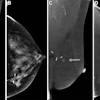
![Images show the pectoralis muscles of a healthy male individual who never smoked (age, 66 years; height, 178 cm; body mass index [BMI, calculated as weight in kilograms divided by height in meters squared], 28.4; number of cigarette pack-years, 0; forced expiratory volume in 1 second [FEV1], 97.6% predicted; FEV1: forced vital capacity [FVC] ratio, 0.71; pectoralis muscle area [PMA], 59.4 cm2; pectoralis muscle volume [PMV], 764 cm3) and a male individual with a smoking history and chronic obstructive pulmonary disorder (COPD) (age, 66 years; height, 178 cm; BMI, 27.5; number of cigarette pack-years, 43.2, FEV1, 48% predicted; FEV1:FVC, 0.56; PMA, 35 cm2; PMV, 480.8 cm3) from the Canadian Cohort Obstructive Lung Disease (i.e., CanCOLD) study. The CT image is shown in the axial plane. The PMV is automatically extracted using the developed deep learning model and overlayed onto the lungs for visual clarity.](https://img.auntminnie.com/mindful/smg/workspaces/default/uploads/2026/03/genkin.25LqljVF0y.jpg?auto=format%2Ccompress&crop=focalpoint&fit=crop&h=100&q=70&w=100)


![Images show the pectoralis muscles of a healthy male individual who never smoked (age, 66 years; height, 178 cm; body mass index [BMI, calculated as weight in kilograms divided by height in meters squared], 28.4; number of cigarette pack-years, 0; forced expiratory volume in 1 second [FEV1], 97.6% predicted; FEV1: forced vital capacity [FVC] ratio, 0.71; pectoralis muscle area [PMA], 59.4 cm2; pectoralis muscle volume [PMV], 764 cm3) and a male individual with a smoking history and chronic obstructive pulmonary disorder (COPD) (age, 66 years; height, 178 cm; BMI, 27.5; number of cigarette pack-years, 43.2, FEV1, 48% predicted; FEV1:FVC, 0.56; PMA, 35 cm2; PMV, 480.8 cm3) from the Canadian Cohort Obstructive Lung Disease (i.e., CanCOLD) study. The CT image is shown in the axial plane. The PMV is automatically extracted using the developed deep learning model and overlayed onto the lungs for visual clarity.](https://img.auntminnie.com/mindful/smg/workspaces/default/uploads/2026/03/genkin.25LqljVF0y.jpg?auto=format%2Ccompress&crop=focalpoint&fit=crop&h=112&q=70&w=112)