Not that long ago, most conversations about AI in radiology started in the same place: What is it? Does it matter? Is this real -- or just another wave of hype? That’s not the conversation anymore.
What I’ve heard recently -- across two very different industry events -- is something more consequential. The question isn’t whether AI matters. The question is whether it holds up under real operational pressure.
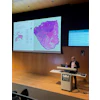
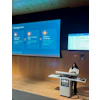
Recently, I attended both RBMA PaRADigm and the Strategic Radiology Spring Summit. The audiences were diverse and the perspectives varied, but together they made one thing clear:
 Rob Carfagno
Radiology has moved past curiosity. It’s now in an accountability phase with AI -- where ideas are expected to translate into real workflows, real outcomes, and real financial impact.
Two conversations, one direction
At RBMA PaRADigm, most of the discussions I had were with revenue cycle, billing, and operational leaders -- the people dealing with denials, prior authorizations, staffing constraints, and backlogs every day.
The tone of those conversations was grounded and specific. People weren’t asking, “What is AI?” They were asking:
- Where does it fit in the workflow?
- How much manual effort can it realistically remove?
- How do we maintain control and accuracy?
- What does a real return actually look like?
In some cases, the conversation went deeper -- into auditability, exception handling, and how AI behaves when the situation doesn’t follow a clean, expected pattern. That’s where enthusiasm gives way to real evaluation.
At the Strategic Radiology Spring Summit, the audience -- and the lens -- shifted. These were physician leaders and executives thinking about the long-term direction of their organizations, and their questions reflected that perspective:
- How do we evaluate AI without overestimating it -- or missing the opportunity?
- How does it affect the sustainability of independent practices?
- What role should it play in responding to reimbursement pressure, payor policy changes, and staffing challenges?
- How do we introduce it responsibly and ethically into the organization?
If RBMA PaRADigm was about execution, Strategic Radiology Spring Summit was about strategy. But across both, the expectation was the same: AI needs to prove itself in real terms.
Why radiology Is further along than it looks
From the outside, it’s easy to assume that AI in healthcare is still in its early stages and uncertain. But radiology is operating from a different foundation.
This is a specialty that has been deeply integrated with technology for decades. Digital imaging, workflow systems, and automation are already part of how radiology functions -- both clinically and operationally.
That history shows up in how AI is being approached.
There’s less fascination with the technology itself, and more focus on:
- Process integration
- Measurable outcomes
- Security, risk, and compliance
- Operational sustainability
In other words, the mindset is already pragmatic.
There’s also no shortage of pressure driving that mindset. Radiologist shortages remain a persistent issue. Reimbursement, particularly for independent groups, continues to tighten. Denials, prior authorization, and administrative complexity are not only increasing, but also becoming more difficult to manage at scale.
What’s changing is the recognition that traditional responses -- adding more staff, expanding manual review, basic automation, and working queues harder -- are delivering diminishing returns.
AI is being evaluated as one of the few tools that can materially shift that equation. But there’s a clear understanding that it has to do more than sound promising.
From enthusiasm to evidence
One of the clearest differences between the two events was how people expect to validate AI.
At RBMA PaRADigm, there was still energy around what AI could unlock. But even there, excitement is increasingly tied to specifics. People want to understand throughput gains, operational lift, and whether it can meaningfully reduce repetitive work -- without introducing new errors or bottlenecks.
At the Strategic Radiology Spring Summit, the tone was more measured. Leaders were thinking less about potential and more about proof.
That showed up in how they talked about adoption:
- Not just whether a solution works in a demo, but whether it performs consistently in production.
- Not just whether it saves time, but whether that time translates into financial impact.
- Not just whether tasks are automated, but whether outcomes actually improve.
There was also a consistent awareness of cost and complexity. AI isn’t being treated as a switch you turn on. It’s an investment -- one that requires integration, oversight, and ongoing evaluation.
What’s emerging is a clear separation between AI that operates completely outside of the workflow -- and AI that works within or alongside them, informed by and continually learning from rich, trusted data. Both approaches can provide value depending on the use case. Increasingly, however, organizations are recognizing that workflow-aware AI has the potential to improve coordination, reduce friction, and drive more consistent operational outcomes.
Where this is playing out first: The revenue cycle
If there’s one area where these expectations are most visible today, it’s the revenue cycle. This is where AI is already being tested against real operational constraints -- and where results can be easier to measure.
At RBMA PaRADigm, conversations around denials and appeals came up repeatedly. These are processes defined by volume, variability, and manual effort -- the kind of environment where even modest improvements can have an outsized impact.
What stood out was not just interest in automation, but how people framed success. It wasn’t about removing humans from the process. It was about:
- Reducing time spent on repetitive, low-value tasks.
- Improving consistency across high-volume workflows.
- Increasing recovery rates in denied claims.
- Allowing staff to shift toward higher-skill, more analytical work.
In several discussions, there was an emphasis on incremental gains. Even a single-digit improvement in appeal success rates, or a measurable reduction in turnaround time, was seen as meaningful, because of the scale involved.
But there was also a recognition that not all automation is equal.
The organizations starting to see progress are not simply layering AI on top of existing processes. They are integrating it within the workflow itself and making it interoperable with upstream or downstream systems and processes -- aligning it with real business rules, and ensuring that exceptions, edge cases, and compliance requirements are accounted for upfront. Just as importantly, they are keeping experienced staff closely involved -- providing oversight, handling exceptions, and validating outcomes in a controlled, accountable way.
At the same time, there’s a broader dynamic shaping all of this: payors are investing heavily in their own AI capabilities. That creates a new competitive reality. As payors become more sophisticated in how they manage claims and denials, providers should be feeling increased pressure to respond in kind. In that environment, adopting AI isn’t just about efficiency. It’s becoming a necessary part of staying competitive.
What comes next
What we’re seeing now isn’t the beginning of AI in radiology; it’s the beginning of a more disciplined phase. The conversation has shifted from possibility to performance.
And that shift comes with new expectations:
- Evaluate AI based on real-world outcomes, not hypothetical benefits.
- Use well-defined workflows, rather than layering them onto broken ones.
- Combine it with experienced staff, rather than trying to replace them.
- Build in governance, transparency, and accountability from the start.
- Measure success in operational and financial terms, not just technical capability.
The organizations that succeed in this phase won’t necessarily be the fastest adopters. But they will adopt AI with the greatest clarity and purpose. Because in radiology, the goal isn’t to use AI for its own sake. It’s to make it work within the realities of the business, the workflow, and the pressures the industry is navigating every day.
Rob Carfagno, a radiology operations expert with over 25 years’ experience leveraging analytics and financial acumen, is Vice President, Radiology Operations at XiFin, Inc., a leader in revenue cycle management (RCM) and billing solutions enhanced with embedded artificial intelligence (AI) for radiology practices.
The comments and observations expressed are those of the author and do not necessarily reflect the opinions of AuntMinnie.com.