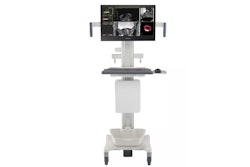
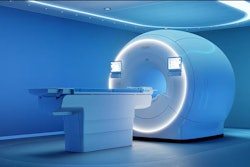
Philips parent company Royal Philips has selected Amazon Web Services (AWS) as its preferred cloud provider for global delivery of healthcare informatics software and technologies.
As part of its cloud-first strategy, Philips is shifting its healthcare data, applications, and services out of its on-premises data centers and expanding its healthcare offerings globally. Working with AWS, Philips reports it has supported more than 34 million patient exams in the cloud over the last year. It has also managed more than 134 petabytes of cloud data, including nearly 11 billion medical images and patient records. Philips plans to scale this to one exobyte of healthcare informatics images and data by 2030.
This work in turn will see the deployment of healthcare informatics software to more than 200 healthcare customer sites in Europe, North America, and Latin America, AWS said.
Philips is also using AWS HealthImaging to manage the storage, analysis, and sharing of petabyte-scale imaging data in the cloud. It has also launched the Tasy Electronic Medical Record (EMR) AI Virtual Assistant. Powered by large language models from Amazon Bedrock, the virtual assistant automatically captures and transcribes conversational data between doctors and patients in real-time.
Philips has been an AWS partner since 2008.




![A normal mammogram confirmed by three-year radiologic follow-up illustrates reader-marked regions of interest (ROIs) during (A) unaided (round 1) and (B) artificial intelligence (AI)–assisted (round 2) reading. Each colored dot represents an ROI for recall by a human reader. Readers could mark more than one ROI per case, represented by multiple dots of the same color. During AI-assisted reading, the AI system displayed three visible prompts: two with suspicion of malignancy scores of 35% (left mediolateral oblique [L MLO] and craniocaudal [L CC]) and one with a suspicion of malignancy score of 10% (right craniocaudal [R CC]), shown as polygonal overlays. Without AI, six of 10 readers (60%) marked a false-positive ROI. With AI assistance, this fell to two of 10 (20%). R MLO = right mediolateral oblique.](https://img.auntminnie.com/mindful/smg/workspaces/default/uploads/2026/07/2026-07-14-radiology-mammogram-ai-auto-bias.H0bYO8QlWs.jpg?auto=format%2Ccompress&fit=crop&h=100&q=70&w=100)


![A normal mammogram confirmed by three-year radiologic follow-up illustrates reader-marked regions of interest (ROIs) during (A) unaided (round 1) and (B) artificial intelligence (AI)–assisted (round 2) reading. Each colored dot represents an ROI for recall by a human reader. Readers could mark more than one ROI per case, represented by multiple dots of the same color. During AI-assisted reading, the AI system displayed three visible prompts: two with suspicion of malignancy scores of 35% (left mediolateral oblique [L MLO] and craniocaudal [L CC]) and one with a suspicion of malignancy score of 10% (right craniocaudal [R CC]), shown as polygonal overlays. Without AI, six of 10 readers (60%) marked a false-positive ROI. With AI assistance, this fell to two of 10 (20%). R MLO = right mediolateral oblique.](https://img.auntminnie.com/mindful/smg/workspaces/default/uploads/2026/07/2026-07-14-radiology-mammogram-ai-auto-bias.H0bYO8QlWs.jpg?auto=format%2Ccompress&fit=crop&h=112&q=70&w=112)