Medical imaging AI company Qure.ai has secured breakthrough device designation from the U.S. Food and Drug Administration's (FDA) Center for Devices and Radiological Health (CDRH) for its tuberculosis software, qSpot-TB.
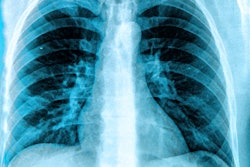
qSpot-TB is a second-read computer aided detection (CAD) and diagnosis device that analyses chest x-rays, identifying all radiological signs suggestive of tuberculosis, according to the firm.
The company has also recently secured FDA clearances for its qXR-LN software, which identifies and localizes lung nodules; its qXR-CTR software, which measures cardiothoracic ratio value; its qXR-PTX-PE software for triage of pneumothorax and pleural effusion in emergency rooms and intensive care units; and its qER software for head CT scans, it said.







![A normal mammogram confirmed by three-year radiologic follow-up illustrates reader-marked regions of interest (ROIs) during (A) unaided (round 1) and (B) artificial intelligence (AI)–assisted (round 2) reading. Each colored dot represents an ROI for recall by a human reader. Readers could mark more than one ROI per case, represented by multiple dots of the same color. During AI-assisted reading, the AI system displayed three visible prompts: two with suspicion of malignancy scores of 35% (left mediolateral oblique [L MLO] and craniocaudal [L CC]) and one with a suspicion of malignancy score of 10% (right craniocaudal [R CC]), shown as polygonal overlays. Without AI, six of 10 readers (60%) marked a false-positive ROI. With AI assistance, this fell to two of 10 (20%). R MLO = right mediolateral oblique.](https://img.auntminnie.com/mindful/smg/workspaces/default/uploads/2026/07/2026-07-14-radiology-mammogram-ai-auto-bias.H0bYO8QlWs.jpg?auto=format%2Ccompress&fit=crop&h=112&q=70&w=112)


