Stanford Children's Health successfully deployed an open-source AI platform that processed over 500 pediatric imaging tasks with 99.2% accuracy, demonstrating that AI can be effectively integrated into clinical radiology workflows for bone-length measurements and fetal MRI analysis.
- High accuracy rates: The AI platform achieved 99.2% processing success and 98.8% end-to-end clinical delivery across 521 tasks over five months.
- Dual pipeline success: The system handles two distinct workflows—automated bone-length measurement for extremity radiographs and super-resolution fetal MRI reconstruction.
- Clinical adoption: Bone-length tasks averaged 88 studies per month, while fetal MRI averaged 35 studies per month, becoming routine at the hospital.
- Open-source advantage: Built from open-source components, the platform eliminates software licensing fees and maintains transparency with data secured on premises.
- Future expansion: The team plans to evaluate additional pediatric conditions including fetal lung assessment and other automated analysis opportunities based on clinical need.
An AI platform could help sustain multiple distinct pipelines in pediatric radiology, suggest findings presented October 27 at the Society for Imaging Informatics (SIIM)-CAIMI meeting.
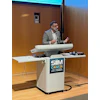
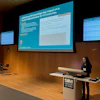
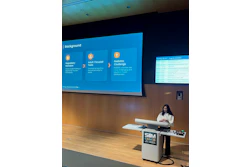
In his presentation, Amol Sinha, a data engineer from Stanford Children’s Health in California, shared his team’s findings showing the platform’s success across over 500 tasks over a five-month period. The AI pipelines within the platform focused on measuring bone length and fetal MRI.
“We consider these pipelines highly successful, and they have become part of routine pediatric radiology at our hospital,” Sinha told AuntMinnie. “Volume is now steady and clinically meaningful. Bone length has averaged about 88 studies per month [peak, 107], roughly four every weekday. Fetal MRI has averaged about 35 studies per month, one to two every weekday.”
While AI models for radiology continue to show promise in research settings, it remains challenging to successfully integrate these models into clinical workflows. Successful integration needs DICOM routing, task orchestration, structured output delivery, failure recovery, and monitoring infrastructure. Sinha and colleagues noted that these metrics are underrepresented in literature and usually addressed through commercial platforms.
The researchers built a platform from open-source components to deliver AI results end-to-end into the clinical reading workflow. They tested the platform across two structurally distinct pipelines: automated bone-length measurement for extremity radiographs and super-resolution fetal MRI reconstruction.
The platform processed 521 clinical tasks over a five-month period in 2026. These included 360 bone-length tasks and 161 fetal MRI tasks across 462 pediatric patients.
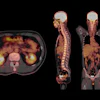
 Illustrative case from one examination; not an image-quality validation. Zoom and windowing differ between panels. Local visualization of pipeline outputs.Amol Sinha
AI processing succeeded in 517 cases (99.2%). And full end-to-end delivery to clinical systems reached 515 cases (98.8%).
Root-cause analysis identified the following errors: two dispatch-layer race conditions where processing succeeded, but delivery failed, three container exit-code mismatches after successful reconstruction, and one misrouted study.
Finally, the team reported a median turnaround of 12.9 seconds for bone-length tasks and 15.6 minutes for fetal reconstruction. Steady state throughput represents about 130 tasks monthly.
Sinha said using open-source software means no software licensing fees are needed for orchestration tools. He added that the platform connects “seamlessly” with the hospital’s existing clinical systems, with a single on-premises server running both pipelines. Sinha also said the system is transparent.
“Every routing rule, retry policy, and alert can be inspected, and the data stay inside our hospital network,” he told AuntMinnie.
He said the team is planning a retrospective evaluation of its studies for fetal MRI and bone length exams. Future studies will also focus on fetal lung assessment and learning where else the platform can help.
“We will work with radiologists and clinicians to identify other pediatric conditions where automated analysis would help most, such as repetitive measurements, motion-limited examinations, and time-consuming reconstructions. We will add them according to clinical need,” Sinha said. “Because the platform is open source and built on standards, it'd be great to share our approach. Other children's hospitals could then offer the same benefits without commercial platforms.”
Read AuntMinnie’s full coverage of CAIMI 2026 here.