A University of Massachusetts Amherst biomedical imaging and data science team has secured a grant from the National Institutes of Health (NIH) to develop a deep-learning model for predicting Alzheimer’s disease at least two years before symptom onset.
Principal investigators are Madalina Fiterau, PhD, of the university's Manning College of Information and Computer Sciences, and Joyita Dutta, PhD, of its Biomedical Imaging and Data Science Lab (BIDSLab).
The team will use brain MRIs taken in real-world settings and multimodal clinical data to create predictive models for Alzheimer's. As part of the announcement, they noted limitations with previous research using engineered data from the Alzheimer’s Disease Neuroimaging Initiative (ADNI).
For the project, the investigators plan to compare the performance of predictive models that were trained on curated datasets against real data collected in the wild. The research is important because it will enable a predictive algorithm to use standard MRIs. It also aims to overcome model biases due to demographic gaps in the ADNI data.
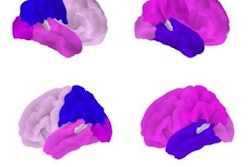
In 2023, Dutta's lab gained recognition for a new approach for subtyping Alzheimer’s disease and combining genomic- and tau-PET-imaging data based on a novel clustering framework.