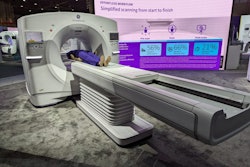
GE HealthCare (GEHC) said it will highlight the company’s AI technology at RSNA 2023, and noted a focus on putting unused healthcare data to use to help providers optimize care.
Approximately 30% of the world’s data is generated by healthcare and 97% of data produced by hospitals remains unused, GE HealthCare said. In addition, the pace of digitization has quickened over the past three years, in part due to the COVID-19 pandemic, the company said.
At RSNA, the company will showcase its App Orchestrator, an application orchestration solution that can give customers easy access to multiple applications from multiple companies, and CardioVisio, an AFiB patient management dashboard designed to save time, improve clinical confidence, and deliver precision care, GE HealthCare said.
In addition, the company said that it has topped a U.S. Food and Drug Administration (FDA) list of AI-enabled medical devices, with 58 listed 510(k) clearances or authorizations to date, including Sonic DL for faster MRI scans, Auto Segmentation for streamlined radiation therapy workflow, and Precision DL for enhanced small, low-contrast lesion detectability compared to conventional Time-of-Flight PET/CT scanner.
Also, the company said it is collaborating with Nuance and Microsoft on a research technology project intended to automatically assemble relevant prior reports and summarize significant content for radiologists in the imaging workflow.