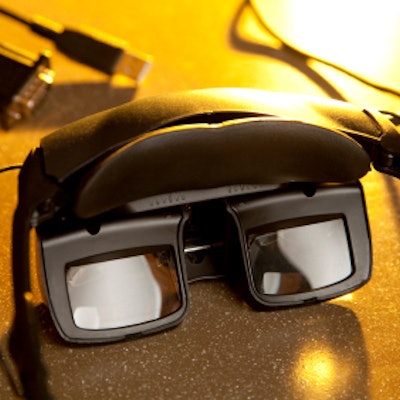
Global healthcare certification organization Inteleos is highlighting research it has conducted to explore the use of virtual reality (VR) platforms for medical imaging.
Inteleos data science researchers evaluated current capabilities of VR technology, as well as the data streams needed to validate the authenticity of tasks, and using it for real-world applications, exploring how VR data streams are tracked and how verifiable VR processes are, according to the firm.
The company plans to share the research at its Innovations in Medical Education conference to be held February 16 to 17 at the Keck School of Medicine of the University of Southern California.









![A normal mammogram confirmed by three-year radiologic follow-up illustrates reader-marked regions of interest (ROIs) during (A) unaided (round 1) and (B) artificial intelligence (AI)–assisted (round 2) reading. Each colored dot represents an ROI for recall by a human reader. Readers could mark more than one ROI per case, represented by multiple dots of the same color. During AI-assisted reading, the AI system displayed three visible prompts: two with suspicion of malignancy scores of 35% (left mediolateral oblique [L MLO] and craniocaudal [L CC]) and one with a suspicion of malignancy score of 10% (right craniocaudal [R CC]), shown as polygonal overlays. Without AI, six of 10 readers (60%) marked a false-positive ROI. With AI assistance, this fell to two of 10 (20%). R MLO = right mediolateral oblique.](https://img.auntminnie.com/mindful/smg/workspaces/default/uploads/2026/07/2026-07-14-radiology-mammogram-ai-auto-bias.H0bYO8QlWs.jpg?auto=format%2Ccompress&fit=crop&h=112&q=70&w=112)


