
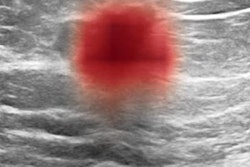
From mammography to ultrasound, artificial intelligence (AI) offers a variety of advantages for breast imaging. With breast ultrasound, for example, the use of an AI algorithm cut in half reading time for radiologists. Dr. Amy Patel discusses her practice's experience with AI for breast ultrasound.
Patel's radiology group found that their use of AI for breast ultrasound saved time for each case they interpreted, improving their throughput and volume of diagnostic cases and reducing waiting times for both patients and physicians. What's more, breast ultrasound AI has improved their diagnostic confidence.
Patel is medical director of women's imaging at Liberty Hospital in Liberty, MO, and is assistant professor of radiology at the University of Missouri-Kansas City School of Medicine.








![A normal mammogram confirmed by three-year radiologic follow-up illustrates reader-marked regions of interest (ROIs) during (A) unaided (round 1) and (B) artificial intelligence (AI)–assisted (round 2) reading. Each colored dot represents an ROI for recall by a human reader. Readers could mark more than one ROI per case, represented by multiple dots of the same color. During AI-assisted reading, the AI system displayed three visible prompts: two with suspicion of malignancy scores of 35% (left mediolateral oblique [L MLO] and craniocaudal [L CC]) and one with a suspicion of malignancy score of 10% (right craniocaudal [R CC]), shown as polygonal overlays. Without AI, six of 10 readers (60%) marked a false-positive ROI. With AI assistance, this fell to two of 10 (20%). R MLO = right mediolateral oblique.](https://img.auntminnie.com/mindful/smg/workspaces/default/uploads/2026/07/2026-07-14-radiology-mammogram-ai-auto-bias.H0bYO8QlWs.jpg?auto=format%2Ccompress&fit=crop&h=112&q=70&w=112)


