On Demand | NMMIEE-4 | Learning Center -- NMMI
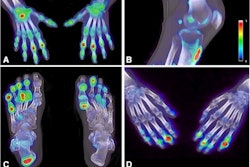
In this course, nuclear medicine physician Dr. Erica Martin-Macintosh of Sanford Health in Fargo, ND, will discuss triaging frostbite injuries with multiphase technetium-99m (Tc-99m) methylenediphosphonate (MDP) bone scintigraphy.Extreme cold exposure causes distal arterial vasoconstriction and ischemia, a functional process that can be detected by bone scintigraphy. Timely imaging is critical, with treatments ranging from noninvasive care to catheter-directed thrombolytic therapy and amputation, according to Martin-Macintosh.
In this course, Martin-Macintosh will discuss the value of multiphase Tc-99m MDP scintigraphy as a noninvasive method for demarcating viable perfused tissue from ischemic or infarcted tissue and emphasize the use of delayed Tc-99m MDP planar imaging and SPECT/CT for assessing depth and extent of infarcted tissue for surgical debridement and amputation.
In addition, Martin-Macintosh will provide a pictorial review of lessons and caveats learned at a level 1 trauma center in Fargo during algorithmic implementation of MDP frostbite imaging.
"MDP imaging can be used to select patients for catheter-directed thrombolytic therapy as well as guide amputation planning," she noted.