PET/MRI imaging reveals that altered immune cell activity in the skull's bone marrow is linked to how often people experience migraines, suggesting a new potential target for migraine treatment.
- Researchers at Massachusetts General Hospital scanned 60 migraine patients and 9 healthy controls using PET/MRI imaging with a radiotracer that marks immune cells
- Skull bone marrow immune activity was significantly elevated in patients with moderate-to-high migraine frequency (more than 4 days per month) compared to healthy controls
- The study found a positive association between bone marrow immune signal and circulating interleukin-16, an inflammatory marker linked to migraine
- This is the first study to directly evaluate skull bone marrow immune activity in migraine patients, opening a new avenue for therapeutic investigation
- Findings were published November 13 in The Lancet Medical Imaging & Theranostics
PET/MRI scans have revealed activity in the skull’s bone marrow linked to how often patients experience migraines, researchers have reported.
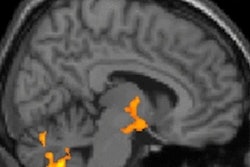
A group at Massachusetts General Hospital in Boston found altered immune cell activity in the skull's bone marrow among 60 adults with migraine compared with nine healthy controls who underwent translocator protein (TSPO) PET/MRI, with the findings suggesting a potential new therapeutic target for the condition.
“Our findings suggest that immune processes within the [skull bone marrow] might be altered in individuals with moderate-to-high migraine frequency and could represent a potential target for future therapeutic investigation,” noted lead author Ludovica Brusaferri, PhD, and colleagues. The study was published November 13 in The Lancet Medical Imaging & Theranostics.
The biological mechanisms underlying migraine remain incompletely understood, the authors explained. Prior TSPO-PET imaging has suggested inflammatory processes involving the skull or adjacent membranes may be involved, yet whether the signal originates from the skull bone marrow remains uncertain, they added.
To further elucidate the issue, the researchers used PET/MRI scanner and a radiotracer called carbon-11 (C-11) PBR28, which binds to the 18-kDa translocator protein (TSPO), a marker of immune cell density. They enrolled 60 adults (mean age, 34.67 years old) who reported four to 20 headache days per month and nine healthy controls. Participants underwent 90-minute continuous scans.
 Representative axial views illustrate the processing pipeline for a single representative subject. From left to right: the original anatomical T1-weighted MRI; the corresponding pseudoCT image (pCT); the extracted SBM mask outlined in red; the PET skull bone marrow (SBM) signal extracted from the mask; the SBM PET signal registered to Montreal Neurological Institute-152 standard space for group-level analysis.The Lancet Medical Imaging & Theranostics
According to the results, the skull bone marrow TSPO-PET signal was positively associated with migraine frequency and was elevated compared with controls. Compared with controls, the signal was significantly elevated (p = 0·038) in individuals with moderate-to-high migraine burden (> four days per month), but was not elevated in those reporting lower attack frequencies. TSPO-PET signal was also positively associated with circulating interleukin-16 and partly accounted for the relationship between migraine frequency and interleukin-16.
"To the best of our knowledge, in addition to our small pilot study, no studies have evaluated the role of the [skull bone marrow] TSPO-PET signal in migraine pathology or evaluated its association with circulating inflammatory markers," the researchers wrote.
Ultimately, the study provides evidence of an association between the skull bone marrow TSPO-PET signal and migraine frequency. Future studies should validate the findings in larger cohorts, investigate longitudinal dynamics across different migraine phases, and clarify causal pathways linking peripheral and central inflammatory processes, the group concluded.
The full study is available here.