Interventional radiology firm Penumbra said it is launching a new vascular embolization device at next week's Society of Interventional Radiology (SIR) meeting in Atlanta.
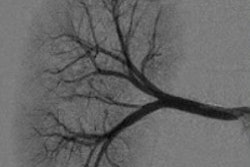
The peripheral occlusion device, known as POD, is designed to anchor to the vessel wall, enabling interventionalists to increase accuracy and packing density, resulting in a more effective embolization, Penumbra said.
POD's anchor technology allows precise placement of the device at the target location, the company said. The device quickly transitions to a soft packing segment to create a stable dense occlusion. Once POD has achieved the desired positioning, instant detachment ensures physician control.
POD is designed to be delivered through a high-flow microcatheter, enabling the clinician to mechanically occlude distal vessels, according to the firm.






![Representative example of a 16-year-old male patient with underlying X-linked adrenoleukodystrophy. (A, B) Paired anteroposterior (AP) chest radiograph and dual-energy x-ray absorptiometry (DXA) report shows lumbar spine (L1 through L4) areal bone mineral density (BMD). The DXA report was reformatted for anonymization and improved readability. The patient had low BMD (Z score ≤ −2.0). (C) Model (chest radiography [CXR]–BMD) output shows the predicted raw BMD and Z score in comparison with the DXA reference standard, together with interpretability analyses using Shapley additive explanations (SHAP) and gradient-weighted class activation maps. The patient was classified as having low BMD, consistent with the reference standard. AM = age-matched, DEXA = dual-energy x-ray absorptiometry, RM2 = room 2, SNUH = Seoul National University Hospital, YA = young adult.](https://img.auntminnie.com/mindful/smg/workspaces/default/uploads/2026/04/ai-children-bone-density.0snnf2EJjr.jpg?auto=format%2Ccompress&fit=crop&h=112&q=70&w=112)


