Cleerly is touting study results regarding its Ischemia technology, published March 13 in the Journal of the American College of Cardiology: Cardiovascular Imaging.
The study describes the validation of Cleerly's AI-guided quantitative coronary CT angiography (AI-QCT) Ischemia technology for diagnostic accuracy and prognostic risk stratification. In two trials, the Credence and Pacific-1 studies comprised a total of 513 patients who underwent coronary CT angiography (CCTA), myocardial perfusion imaging with SPECT, and fractional flow reserve derived from CT (FFRCT).
The company highlighted that for patients with an abnormal Cleerly AI-QCT Ischemia finding, a positive result was associated with a nearly sevenfold increase of adverse cardiovascular events during an eight-year follow-up.
These study results come after Cleerly announced that its Cleerly Ischemia software device is billable using the new Category I CPT code 75580.



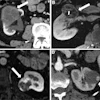





![Axial images from unenhanced calcium score cardiac CT (left) and curved planar reformation images from CT angiography (right) show that higher long-term exposure to air pollution is associated with greater coronary artery calcium and more obstructive coronary artery disease (CAD). Top row: Images in a 68-year-old male patient with higher 10-year mean ambient air pollution exposure (7.9 μg/m3 for particulate matter measuring ≤2.5 μm in diameter [PM2.5] and 17.4 parts per billion [ppb] for NO2) with extensive CAD (coronary artery calcium score [CACS] >1,000 and obstructive CAD [≥70% diameter stenosis]). Bottom row: Images in a 57-year-old female patient with lower 10-year mean ambient air pollution exposure (6.3 μg/m3 for PM2.5 and 4.6 ppb for NO2) with no CAD (CACS = 0 and no obstructive stenosis).](https://img.auntminnie.com/mindful/smg/workspaces/default/uploads/2026/06/hanneman.r6SMLzkezo.png?auto=format%2Ccompress&fit=crop&h=112&q=70&w=112)


