Monday, November 29 | 1:30 p.m.-2:30 p.m. | SSPH05-2 | Room TBA
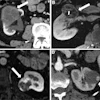
In this session, researchers will discuss the potential of artificial intelligence (AI) for supporting treatment decisions in COVID-19 patients.Making use of a small dataset of 41 COVID-19 cases, researchers from the University of Chicago had previously developed a deep-learning algorithm to predict from CT scans if patients would need corticosteroids -- the primary treatment for severe COVID-19. In this study, they sought to test their model on a larger cohort of 916 patients that included exams acquired on scanners from one of five different vendors: FMI, GE Healthcare, Philips Healthcare, Siemens Healthineers, and United Imaging.
Although overall performance decreased, from an area under the curve (AUC) of 0.85 on the small dataset to 0.68 on the larger dataset, it still reached statistical significance (p = 0.002) compared with random chance (AUC = 0.5). Delving further into the results, the researchers also found that the algorithm's performance varied by scanner manufacturer, ranging from an AUC of 0.52 to 0.64.
Although the algorithm yielded lower performance on the larger dataset, this finding could be attributed to the limited training data and the greater variety of scanner manufacturers utilized in the study, according to the authors.
"Classification performances showed statistically significant performance, indicating strong potential for quantitative CT in informing steroid treatments with performance varying across scanner manufacturers," they concluded.
Stop by this Monday talk by doctoral student Jordan Fuhrman to learn more.