More than 90% of patients who developed COVID-19 showed lung parenchymal abnormalities on chest CT and x-ray three months after recovery in a study published in the September issue of Clinical Infectious Diseases.
The findings highlight the need for further investigation into COVID-19's long-term effects, wrote a team led by Dr. Bram van den Borst of Radboud University Medical Center in Nijmegen, the Netherlands.
"Long-term health consequences of this coronavirus disease ... are yet largely unknown, but many patients are likely to experience long-lasting morbidity," the authors wrote. "Indeed, based on observations from diseases that share COVID-19 characteristics ... it is hypothesized that, in the long-term, a significant number of patients with COVID-19 will suffer from lung function impairment, residual pulmonary parenchymal abnormalities, decreased physical capacity, loss of muscle mass, anxiety, depression, cognitive deficits, post-traumatic stress disorder, fatigue, and poor health status" (Clin Infect Dis, September 2021, Vol. 73:5, pp. e1089-e1098).
The study included 124 patients who had been treated for COVID-19 at Radboud in 2020. Of the 124 patients, 27 had mild, 51 had moderate, 26 had severe, and 20 had critical disease. Each participated in a follow-up examination three months after recovery that consisted of lung function measurement tests, chest CT and x-ray, a six-minute walking test, and a body composition evaluation; each participant also responded to a questionnaire about their mental, cognitive, and health status, as well as their quality of life.
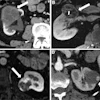
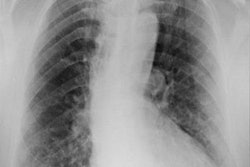
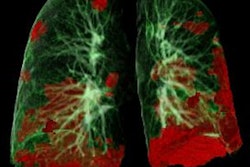
Although the majority of patients showed reduced ground-glass opacities on CT and normal chest x-rays at the three-month follow-up, the researchers also found that 91% had persistent parenchymal lung abnormalities, including ground-glass opacities, pleural lines and parenchymal bands, bronchiolectasis, and fibrosis. Nearly a third of patients had three lung abnormalities on CT at follow-up, and nearly a quarter had four.
| CT imaging results in COVID-19 patients 3 months after recovery | |
| Type of abnormality | |
| Ground-glass opacity | 86% |
| Lines and bands | 64% |
| Bronchiolectasis | 60% |
| Fibrosis | 26% |
| No. of abnormalities | |
| 0 | 9% |
| 1 | 20% |
| 2 | 20% |
| 3 | 27% |
| 4 | 24% |
The team also found the following:
- 72% of patients reported lower quality of life.
- 69% showed fatigue.
- 64% demonstrated functional impairment.
- 36% showed mental and/or cognitive function difficulties.
"Our results indicate that a substantial proportion of patients still experience severe problems in various health domains three months after COVID-19," the group wrote.
The study suggests that more research on the long-term effects of COVID-19 is needed, according to the authors.
"Longer follow-up studies are warranted to elucidate natural trajectories of COVID-19 recovery, to find predictors of complicated long-term trajectories, and to develop strategies to decrease long-term COVID-19 morbidity," they concluded.