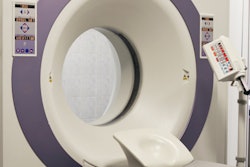
Exposure to radiation levels as low as the equivalent of three CT scans promoted the spread of cancer cells in the otherwise healthy esophagus of mice in a recent study, published online July 18 in Cell Stem Cell.
The researchers from the U.K. exposed several mice to a 50-mGy dose of radiation -- roughly the same amount of exposure from three to four conventional CT scans. They tracked the behavior of the esophageal cells with genetic testing 24 hours and 48 hours after exposure and found significant increases in the size and proportion of p53 mutant cells, which have been associated with various kinds of cancer.
"Our bodies are the set of 'Game of Clones' -- a continuous battle for space between normal and mutant cells," first author David Fernandez-Antoran, PhD, from the Wellcome Sanger Institute said in a statement. "We show that even low doses of radiation, similar to three CT scans' worth, can weigh the odds in favor of cancer-capable mutant cells."
Additional testing revealed that exposing the mice to radiation five times over the course of 30 days further increased the presence of mutant cells in the esophagus fourfold. Yet the researchers also discovered that providing the mice with N-acetyl cysteine, an over-the-counter antioxidant, prevented the growth of p53 mutant cells in the esophagus, despite exposure to radiation.
"Medical imaging procedures using radiation, such as CT scans and x-rays, have a very low level of risk -- so low that it's hard to measure," co-author Philip Jones, PhD, said. "This research is helping us understand more about the effects of low doses of radiation and the risks it may carry."