Dear CT Insider,
The highly anticipated final results of the Dutch-Belgian Randomized Lung Cancer Screening (NELSON) trial were, at last, released in a Tuesday presentation at the 2018 World Conference on Lung Cancer in Toronto.
Industry observers have been anxiously awaiting results of the NELSON study to see if it provides the research backing for broader CT lung cancer screening programs in Europe, as the National Lung Screening Trial (NLST) did in the U.S.
How does NELSON's mortality reduction rate compare with the 20% reduction found in its U.S. counterpart? Lead investigator Dr. Harry de Koning, PhD, delivers the scoop in this edition's Insider Exclusive.
On the subject of CT screening, researchers from Duke discovered that there is still significant variability in access to screening among eligible individuals based on where people live. Increasing the number of screening programs in rural areas could help make these programs more effective, according to a separate team from New York, which explored whether nuclear weapons workers were at higher risk for lung cancer than the general population.
Lung cancer isn't the only disease diagnosed on chest CT scans. A group from China found that assessing coronary artery disease on the CT scans of lung cancer patients helped clinicians determine which patients required surgery for both the heart and lungs. And computer software could help facilitate reporting for such CT exams, whether it involves computer-aided detection to speed up report dictation or an artificial intelligence algorithm to identify lung nodules.
Several studies have revealed new findings concerning other forms of CT exams as well:
- Radiologists' usage rate of coronary CT angiography (CCTA) has been on the rise in recent years. Physicians from Virginia provide five reasons why the test may be the best first-line option for evaluating coronary artery disease.
- A follow-up study of the Scottish Computed Tomography of the Heart (SCOT-HEART) trial further affirmed the value of CCTA by revealing that it significantly lowered the risk of heart attack or death from coronary artery disease. Get the details by clicking here.
- In contrast, head CT has received flak as an overused test, particularly for evaluating children presenting with acute head trauma. Using a CT decision aid could help reduce downstream imaging for such cases.
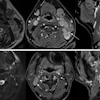
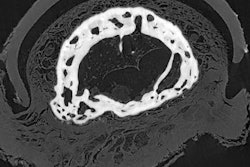
- CT is also growing increasingly more popular for postmortem examination, as well as in the field of paleopathology. Check out head CT scans acquired during autopsy, or see phase-contrast CT scans that revealed microscopic details of an ancient mummy.
Finally, CT experts offered insight at the recent International Society for Computed Tomography (ISCT) symposium in San Diego on myriad topics, from the evaluation of penetrating chest trauma to the advantages afforded by dual-energy CT and fractional flow reserve CT.
Feel free to reach out with any relevant news or suggestions for topics you'd like to see covered in our CT Community at AuntMinnie.com.