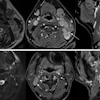
Researchers from Sweden found that 4D CT provided heart-flow patterns and measurements similar to those from 4D MRI, with shorter acquisition time and improved spatial resolution, according to an article recently published online in Radiology.
The researchers, led by first author Jonas Lantz, PhD, from Linköping University, acquired coronary CT angiography and 4D flow MRI data from 12 patients referred to their institution. They discovered that there was a high correlation between the modalities for basic flow measurements (r = 0.98, p < 0.05), kinetic energy (r = 0.98, p < 0.05), and various components of intracardiac flow (r = 0.93, r = 0.87; p < 0.05). Three observers also graded data from the two modalities as qualitatively similar (Radiology, June 26, 2018).
Beyond these similarities, 4D CT addressed several limitations of 4D MRI, including its long acquisition time and limited spatial resolution, noted Dr. Joseph Schoepf from the Medical University of South Carolina in an accompanying editorial.
"The results from this proof-of-concept study debut the 4D flow CT technique as a promising alternative to 4D flow MRI with its own unique benefits and limitations," he wrote.