Dear AuntMinnie Member,
Why aren't more smokers getting CT lung cancer screening scans? That's the vexing question being asked by a new study to be presented at the upcoming American Society of Clinical Oncology meeting next month.
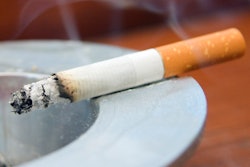
Fewer than 2% of high-risk current and former smokers had undergone CT lung screening in the study conducted by researchers from the University of Louisville. That is even lower than the rates of less than 4% found in previous studies.
Smoking is a proven killer, and CT lung screening has been shown to reduce mortality by 20%. So why aren't more eligible people getting screened? The researchers offer a few theories, but it's a question that will have to be addressed by the healthcare community if CT screening is to achieve its full potential.
Read more by clicking here, or visit our CT Community at ct.auntminnie.com.
Immuno-PET tracer
In other news, visit our Molecular Imaging Community for a pair of exciting new articles on recent developments in the discipline.
First, check out this story on a new PET radiotracer being developed at Stanford University that homes in on immune cells. A group led by Dr. Sanjiv "Sam" Gambhir, PhD, showed how the immuno-PET tracer lights up immune cells that become active when cancer develops. The researchers believe it could provide an earlier warning than targeting the cancer cells themselves, as FDG does.
Next up is this article on a study in which Duke University researchers used an automated software-based technique to quantify metastases on bone scintigraphy scans of patients with prostate cancer.
Get these stories and more in the community, at molecular.auntminnie.com.
Countering hype in AI
Finally, visit our Artificial Intelligence Community to read about a recent speech at the Canadian Association of Radiologists annual meeting by RSNA President Dr. Vijay Rao on countering the hype about artificial intelligence (AI) and radiology. Dr. Rao believes that scaremongering about AI's impact is rife -- even within medical schools -- and it's incumbent upon radiology's leadership to speak out. Read more by clicking here, or visit the community at ai.auntminnie.com.
You might also want to check out this week's #MyRadGirlfriend cartoon, which addresses this very topic.