Cardiovascular software developer HeartFlow announced that seven new commercial payors will cover the use of its fractional flow reserve (FFR) CT software.
The firm's FFR-CT Analysis software is designed to help clinicians diagnose and treat patients with suspected coronary artery disease using a personalized 3D model.
The new medical policies were issued by Cigna; Florida Blue; Highmark; the Blue Cross/Blue Shield plans of Michigan, North Carolina, and Vermont; and Independence Blue Cross. That means commercial coverage for HeartFlow FFR-CT Analysis is now available for approximately 130 million patients, according to the company.

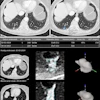







![Images show the pectoralis muscles of a healthy male individual who never smoked (age, 66 years; height, 178 cm; body mass index [BMI, calculated as weight in kilograms divided by height in meters squared], 28.4; number of cigarette pack-years, 0; forced expiratory volume in 1 second [FEV1], 97.6% predicted; FEV1: forced vital capacity [FVC] ratio, 0.71; pectoralis muscle area [PMA], 59.4 cm2; pectoralis muscle volume [PMV], 764 cm3) and a male individual with a smoking history and chronic obstructive pulmonary disorder (COPD) (age, 66 years; height, 178 cm; BMI, 27.5; number of cigarette pack-years, 43.2, FEV1, 48% predicted; FEV1:FVC, 0.56; PMA, 35 cm2; PMV, 480.8 cm3) from the Canadian Cohort Obstructive Lung Disease (i.e., CanCOLD) study. The CT image is shown in the axial plane. The PMV is automatically extracted using the developed deep learning model and overlayed onto the lungs for visual clarity.](https://img.auntminnie.com/mindful/smg/workspaces/default/uploads/2026/03/genkin.25LqljVF0y.jpg?auto=format%2Ccompress&crop=focalpoint&fit=crop&h=112&q=70&w=112)


