Tuesday, November 29 | 11:30 a.m.-11:40 a.m. | SSG04-07 | Room E352
An organ-based dose modulation system enables reduction of CT liver doses by one-quarter or more, with no reduction in image quality, say researchers from France."Chest-abdomen-pelvis CT is a very common and highly radiating examination, for which dose management is important, especially in patients' follow-up," wrote Dr. Loic Boussel, from the University of Lyon, in an email to AuntMinnie.com.
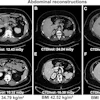
In chest-abdomen-pelvis CT with standard automatic exposure control, the need for contrast resolution in the liver determines target image quality -- and therefore the radiation dose -- for the entire scan, Boussel noted. The study examined dose reduction and image quality with a new organ-based dose modulation system that allowed the choosing of different image quality settings in the liver than in the chest and pelvis.
Boussel and colleagues included 27 patients who underwent chest-abdomen-pelvis CT for oncology follow-up within a year's time on two different scanners, one using standard automatic exposure control and the other using an organ dose-based modulation protocol (Liver DoseRight, Philips Healthcare).
As desired, dose remained constant in the liver with no significant reduction (p > 0.08) while signal-to-noise reduction was significant only in the pelvis. At the same time, the diagnostic confidence showed no significant difference (p > 0.05) between the two scan types.
Organ-based dose modulation "allows a reduction of patient radiation dose" of 20.5% to 28.7% on total dose as well as lung, breast, and pelvis areas, Boussel said.