Toshiba America Medical Systems has received clearance from the U.S. Food and Drug Administration (FDA) for its newest dose reduction technology, adaptive iterative dose reduction (AIDR) 3D.
AIDR 3D is Toshiba's third-generation iterative dose reconstruction software. It can be integrated with the company's SureExposure 3D software, which calculates the minimum radiation exposure required for every exam and adjusts the dose for each patient based on a preset, targeted level of image quality, according to the firm.
The company plans to offer AIDR 3D software upgrades and related training at no cost to all existing Aquilion One, Aquilion Premium, and Aquilion Prime CT customers.
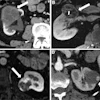






![Images show the pectoralis muscles of a healthy male individual who never smoked (age, 66 years; height, 178 cm; body mass index [BMI, calculated as weight in kilograms divided by height in meters squared], 28.4; number of cigarette pack-years, 0; forced expiratory volume in 1 second [FEV1], 97.6% predicted; FEV1: forced vital capacity [FVC] ratio, 0.71; pectoralis muscle area [PMA], 59.4 cm2; pectoralis muscle volume [PMV], 764 cm3) and a male individual with a smoking history and chronic obstructive pulmonary disorder (COPD) (age, 66 years; height, 178 cm; BMI, 27.5; number of cigarette pack-years, 43.2, FEV1, 48% predicted; FEV1:FVC, 0.56; PMA, 35 cm2; PMV, 480.8 cm3) from the Canadian Cohort Obstructive Lung Disease (i.e., CanCOLD) study. The CT image is shown in the axial plane. The PMV is automatically extracted using the developed deep learning model and overlayed onto the lungs for visual clarity.](https://img.auntminnie.com/mindful/smg/workspaces/default/uploads/2026/03/genkin.25LqljVF0y.jpg?auto=format%2Ccompress&crop=focalpoint&fit=crop&h=112&q=70&w=112)