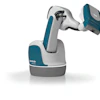
Orthopedic and podiatric imaging technology developer CurveBeam has received U.S. Food and Drug Administration (FDA) 510(k) clearance for its pedCAT 3D foot and ankle CT scanner.
A weight-bearing, in-office 3D system, pedCAT employs conebeam CT (CBCT) technology to provide undistorted and unobstructed images of the foot and ankle region under true physiological weight-bearing conditions, according to the company.
It offers a 4 x 5-ft footprint with scan times of less than a minute. PedCAT's 3D volumetric data can be used for preoperative planning; diagnosing, confirming, or ruling out fractures; evaluating subluxations and dislocations; evaluating arthritic joints; and early detection of osteomyelitis, CurveBeam said.





![Images show the pectoralis muscles of a healthy male individual who never smoked (age, 66 years; height, 178 cm; body mass index [BMI, calculated as weight in kilograms divided by height in meters squared], 28.4; number of cigarette pack-years, 0; forced expiratory volume in 1 second [FEV1], 97.6% predicted; FEV1: forced vital capacity [FVC] ratio, 0.71; pectoralis muscle area [PMA], 59.4 cm2; pectoralis muscle volume [PMV], 764 cm3) and a male individual with a smoking history and chronic obstructive pulmonary disorder (COPD) (age, 66 years; height, 178 cm; BMI, 27.5; number of cigarette pack-years, 43.2, FEV1, 48% predicted; FEV1:FVC, 0.56; PMA, 35 cm2; PMV, 480.8 cm3) from the Canadian Cohort Obstructive Lung Disease (i.e., CanCOLD) study. The CT image is shown in the axial plane. The PMV is automatically extracted using the developed deep learning model and overlayed onto the lungs for visual clarity.](https://img.auntminnie.com/mindful/smg/workspaces/default/uploads/2026/03/genkin.25LqljVF0y.jpg?auto=format%2Ccompress&crop=focalpoint&fit=crop&h=112&q=70&w=112)