Dear CT Insider,
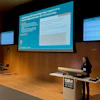
This week's most important CT news is brought to you by a group of folks who normally toil in obscurity -- no, not radiologists (or obscure journalists for that matter), but radiation physicists, who gathered in Philadelphia this week for the American Association of Physicists in Medicine (AAPM) meeting.
Just this morning, for example, physicists from M. D. Anderson Cancer Center in Houston reported that your standard CT dose index (CTDI) reports for perfusion CT of the head are grossly inaccurate -- off by 50% to 75% depending on the scanner and the patient size. The researchers packed their phantoms with a new kind of dosimeter that features shorter ionization chambers to verify the doses, which turned out to be widely and unsettlingly variable, said the authors. Get the rest of the scoop in this issue's Insider Exclusive.
More upbeat is a report on a new image-processing algorithm developed by the Mayo Clinic in Rochester, MN, that drastically reduced the radiation dose needed for CT perfusion studies. By drastically we mean as much as 95%. Conebeam CT doses were cut, too, in a study you'll find by clicking here.
Young women are at the highest risk from body CT scans, concludes an AAPM report from senior editor Erik L. Ridley, who traveled to Philadelphia for the AAPM meeting. Meanwhile, x-ray tube modulation can help reduce radiation dose in children, according to another report by associate editor Cynthia E. Keen.
In CT of the coronary arteries, don't count on your workstation to give you an accurate measurement of soft plaque even though there's an app for that, say radiologists from the Medical University of South Carolina, who were in Las Vegas this week for the Society of Cardiovascular Computed Tomography meeting. Stay tuned for more from this important gathering.
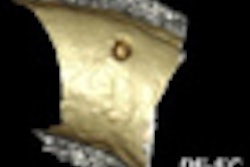
From the recent Computer Assisted Radiology and Surgery meeting in Geneva, we learn that radiologists are aiming to automate the diagnosis of Crohn's disease -- a job CT has never excelled at -- by marking depressions in the intestinal mucosa representing the erosions that characterize the disease.
In this issue, you'll also learn how wide-array scanning can aid assessment of the aorta, and how cardiac CT is worth the dose for surgical planning in children. But across the U.S., cardiac doses are high, says one of the largest reports to date encompassing approximately 100,000 patients. And read about an emerging technique for diagnosing lung cancer by clicking here.
Last but not least, a panel of more than 30 radiologists can't find the pathology a malpractice attorney is suing over.
We invite you to scroll down for all the CT news we've scanned lately, and stay tuned to your CT Digital Community for updates as they happen.