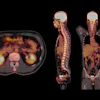
A new image-processing algorithm gives radiologists everything they need to diagnose perfusion CT images using up to 95% less radiation, according to research presented at this week's American Association of Physicists in Medicine (AAPM) meeting in Philadelphia.
The method is good news for perfusion imaging -- a clinically useful CT technique that has been criticized for its high radiation doses, according to authors Juan Carlos Ramirez Giraldo, Cynthia McCollough, PhD, and colleagues from the Mayo Clinic in Rochester, MN, who developed their new technique based on a gradient adaptive bilateral filtration (GABI) algorithm, testing it in two in-vivo pig models.
A typical CT perfusion scan protocol lasts about half a minute and scans the same tissue 20 or 30 times over at low doses, revealing the anatomy as well as the perfusion of contrast agents in the blood. Changing iodine concentrations are used to calculate blood volume and flow, permitting the detection of blood vessel injuries or tumor responses to treatment.
The GABI algorithm works by distinguishing the regions that do not change from those that carry the contrast agent -- effectively reducing image noise while preserving iodine signal.
Technically, the algorithm "expands the bilateral filter algorithm by nonlocally adapting its strength based on a temporal gradient applied to the image dataset, and hence preserving contrast fidelity over time," McCollough said in a statement accompanying release of the abstract.
The study used two live pigs to acquire perfusion images, first at a full (reference) dose, followed by scans with sharply reduced doses of 16 mAs (1/10th the radiation dose) and 8 mAs (1/20th the radiation dose) plus use of the GABI filter.
Based on time attenuation curves,background signal-to-noise (S/N) ratios were minimally changed between the high- and low-dose images. The GABI algorithm preserved the temporal fidelity of the images while dramatically reducing the image noise that resulted from the very-low-dose acquisitions, the authors reported. Spatial resolution and CT noise texture were largely maintained.
The GABI method is also fast because it is based on image space and is noniterative, the authors reported. In high S/N ratio tasks such as renal perfusion, dose reductions can be as high as 20-fold with essentially no reduction in perfusion information and image quality, they wrote.
"With this algorithm, we're trying to maintain both the image quality, so that a doctor can recognize the anatomic structures, and the functional information, which is conveyed by analyzing the flow of the contrast agent over the many low dose scans," they noted.
Future research will focus on optimizing the acquisition parameters.
By Eric Barnes
AuntMinnie.com staff writer
July 20, 2010
Related Reading
CT speeds antiangiogenesis therapy assessment, June 14, 2010
CT perfusion distinguishes HCC from other liver lesions, April 29, 2010
Perfusion CT handily distinguishes malignant neck nodes, January 25, 2010
CT of colorectal liver mets may predict survival, December 1, 2009
Copyright © 2010 AuntMinnie.com