Dear AuntMinnie Member,
SAN FRANCISCO - The International Society for Computed Tomography's (ISCT) annual meeting continues this week, with AuntMinnie.com providing daily updates from this important conference in our CT Digital Community.
A prominent theme at the conference is managing the risks inherent in CT scanning, two of which are increased radiation dose and contrast reactions. In one presentation on Tuesday, Sandra Halliburton, Ph.D., from the Cleveland Clinic discussed how to reduce radiation dose by scanning with lower kVp settings.
But there are some guidelines you should follow before dropping your tube voltage -- find out what they are by clicking here.
In other presentations, ISCT speakers discussed the relationship between CT contrast and contrast-induced nephropathy (CIN). The causes of and relationship between CIN and acute kidney injury are still not totally clear, but the speakers provided some useful guidance on what to look for in patients who might be at risk for clinically significant CIN and which contrast agents you can use to minimize it. Learn more by clicking here.
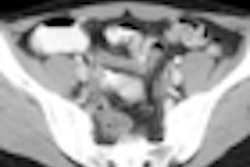
Last but certainly not least, researchers from the University of Wisconsin in Madison unveiled a new study of CT's performance in acute appendicitis in nearly 2,000 patients. Of course the modality was highly sensitive and specific, but learn what else the group found by clicking here.
You'll find these and other stories from the ISCT meeting in our CT Digital Community at ct.auntminnie.com.