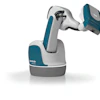
Portable CT developer NeuroLogica launched a new noise/dose reduction algorithm designed to maintain high spatial resolution while reducing image noise for low-dose CT scans at this week's RSNA conference in Chicago.
The adaptive postreconstruction filter offers improved signal-to-noise ratio for the CereTom portable CT scanner to improve image resolution and reduce radiation dose for patients in critical care and pediatric settings, according to the Danvers, MA-based firm.
Related Reading
NeuroLogica promotes Webster to VP, October 21, 2008
Road to RSNA, CT, NeuroLogica, October 2, 2008
Neurologica completes NJ installation, September 8, 2008
NeuroLogica lands first Canadian install, August 20, 2008
NeuroLogica wins Pennsylvania contract, July 24, 2008
Copyright © 2008 AuntMinnie.com







![Axial images from unenhanced calcium score cardiac CT (left) and curved planar reformation images from CT angiography (right) show that higher long-term exposure to air pollution is associated with greater coronary artery calcium and more obstructive coronary artery disease (CAD). Top row: Images in a 68-year-old male patient with higher 10-year mean ambient air pollution exposure (7.9 μg/m3 for particulate matter measuring ≤2.5 μm in diameter [PM2.5] and 17.4 parts per billion [ppb] for NO2) with extensive CAD (coronary artery calcium score [CACS] >1,000 and obstructive CAD [≥70% diameter stenosis]). Bottom row: Images in a 57-year-old female patient with lower 10-year mean ambient air pollution exposure (6.3 μg/m3 for PM2.5 and 4.6 ppb for NO2) with no CAD (CACS = 0 and no obstructive stenosis).](https://img.auntminnie.com/mindful/smg/workspaces/default/uploads/2026/06/hanneman.r6SMLzkezo.png?auto=format%2Ccompress&fit=crop&h=112&q=70&w=112)


