Dear AuntMinnie Member,
Imaging specialists have made kidney function assessment a key part of patient workup prior to administering iodinated contrast media, to prevent contrast-induced nephropathy. But of the two main methods for measuring renal function, which one works best?
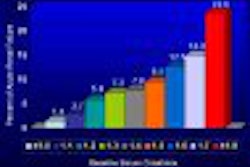
Nephrologists tend to favor estimated glomerular filtration rates (eGFR) over serum creatinine (S-Cr). But a new study indicates that both methods may be equivalent in their ability to predict renal failure following contrast administration, according to a new article by staff writer Eric Barnes that we're featuring in our CT Digital Community.
Researchers from the University of Virginia Health Systems in Charlottesville tested both techniques in a study cohort of more than 6,000 exams in which iodinated contrast was used. They then tracked the effectiveness of both S-Cr and eGFR in predicting which patients developed contrast-induced nephropathy.
How did the techniques compare, and how many patients developed CIN? Find out by clicking here, or visit our CT Digital Community at ct.auntminnie.com.
In breaking news, multicenter trial results to be published in the Journal of the American Medical Association indicate that CT pulmonary angiography detects more cases of pulmonary embolism than ventilation-perfusion (V/Q) scanning. Moreover, CT may help prevent additional cases of PE in the months following the initial scan. You'll find the details here.
Finally, get the latest update on the status of the Canadian nuclear reactor shutdown by clicking here. Shipments of radioisotopes from the facility are expected to resume shortly after the reactor went back online on Sunday.