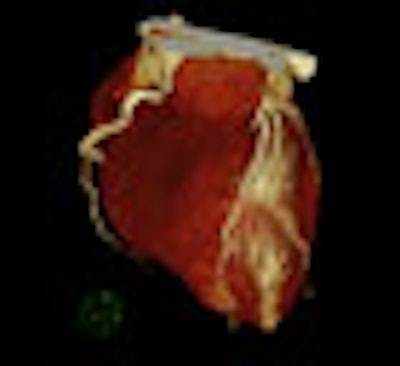
(Booth 4129) This year, Philips Medical Systems of Andover, MA, will unveil innovations in tube and detector technology, as well as image reconstruction advances, on the company's Brilliance 64-channel CT scanner.

Sensitive to radiation dose concerns, Philips will show its Step & Shoot cardiac technique, first demonstrated at the 2006 RSNA meeting, as well as dose reduction capabilities in virtual colonoscopy.
Workflow issues are addressed by Brilliance Everywhere, a thin-client workstation that provides advanced applications to distributed PCs, including various workstations or even a connected PC at home. This approach provides the capability of fully sharing image files, according to the company.
Recognizing the dramatic impact that reimbursement issues have meant to the imaging industry, Philips will also showcase value-oriented configurations of its six-, 16-, and 64-slice scanners.
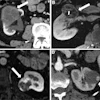







![Axial images from unenhanced calcium score cardiac CT (left) and curved planar reformation images from CT angiography (right) show that higher long-term exposure to air pollution is associated with greater coronary artery calcium and more obstructive coronary artery disease (CAD). Top row: Images in a 68-year-old male patient with higher 10-year mean ambient air pollution exposure (7.9 μg/m3 for particulate matter measuring ≤2.5 μm in diameter [PM2.5] and 17.4 parts per billion [ppb] for NO2) with extensive CAD (coronary artery calcium score [CACS] >1,000 and obstructive CAD [≥70% diameter stenosis]). Bottom row: Images in a 57-year-old female patient with lower 10-year mean ambient air pollution exposure (6.3 μg/m3 for PM2.5 and 4.6 ppb for NO2) with no CAD (CACS = 0 and no obstructive stenosis).](https://img.auntminnie.com/mindful/smg/workspaces/default/uploads/2026/06/hanneman.r6SMLzkezo.png?auto=format%2Ccompress&fit=crop&h=112&q=70&w=112)


