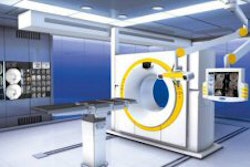
Johns Hopkins University of Baltimore has begun clinical scans with a beta version of a 256-slice CT scanner from Toshiba America Medical Systems of Tustin, CA.
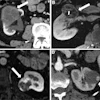
The system was installed in January and patient scans began last month, according to a spokesperson for the university. The work-in-progress system has conducted scans of the brain and heart in a single rotation thanks to its beam width of 12.8 cm, compared to 3.2 cm with a 64-slice scanner, the university said.
The system should prove useful for detecting early signs of arterial stenosis long before symptoms appear, according to Dr. Joao Lima, a Johns Hopkins cardiologist. The system can measure changes in blood flow in vessels as small as 1.5 mm.
For brain scanning, interventional neurologist Dr. Kieran Murphy said he believes that whole-head perfusion imaging will be able to demonstrate slowed blood flow in areas of the brain that are vulnerable to stroke. The scanner's ability to cover the entire organ in one rotation is a major advantage over 64-slice systems, in which data from multiple gantry rotations are merged to create a view of a single organ.
Johns Hopkins is the first institution outside of Japan to install the 256-slice scanner. The system will be used to help prepare for a regulatory submission to the U.S. Food and Drug Administration, with clearance expected within a year, according to the university.
The system will be installed at Johns Hopkins for three months and is on loan from Toshiba.
In other news, Toshiba has formed an educational partnership with Georgia Radiology Research and Educational Network (GRREN) of Atlanta.
GRREN, with its Aquilion 64 CFX and training center, will serve as Toshiba's newest site for training under American College of Cardiology (ACC) Level I and Level II and ACR cardiac CT accreditation programs, according to the Tustin, CA-based vendor.
As part of the GRREN program, physicians will be able to view live and live feed broadcasts of cardiac exams using Toshiba's Aquilion 64 CFX CT system, and experience hands-on education using postprocessing and cardiac clinical analysis workstations from Vital Images, the company said. Courses this year run from April 30 to May 4 and June 11-15.
By AuntMinnie.com staff writers
March 28, 2007
Related Reading
Toshiba rolls out Aplio XG cardiac package, March 27, 2007
Toshiba debuts Virtual Explorer, March 27, 2007
Toshiba debuts new Infinix version, March 26, 2007
McKesson, Toshiba expand partnership, March 21, 2007
Toshiba, McKesson partner on miniPACS, November 27, 2006
Copyright © 2007 AuntMinnie.com