Dear CT Insider,
Cardiac CT has come a long way, baby. In one of those futuristic talks we so love to cover, Dr. Mario Garcia from the Cleveland Clinic Foundation discusses cardiac CT imaging with all its inherent strengths and enduring weaknesses, and looks at where the modality's future progress may lie.
From reliable measurement of coronary artery calcium to CT angiography and functional assessment, multidetector-row CT (MDCT) has been a hit with patients, too, due to the ease of scanning and ever-shorter breath-holds with increasing numbers of detector rows. Even its stubbornly high radiation doses are yielding to improved dose modulation and scanning protocols. You'll find these topics and more in our Insider Exclusive, brought to CT Insider subscribers before its general publication.
Also, AuntMinnie.com staff writer Wayne Forrest reports from this week's American Heart Association (AHA) meeting in Chicago, where researchers have found that dual-slice CT dramatically reduces motion artifacts in coronary CT angiography.
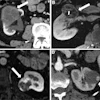
Today, radiologists from Seoul, South Korea, report on the value of 3D CT imaging recipes for specific small-bowel questions that axial slices can't answer. And it turns out the severity of Crohn's disease at CT enterography correlates with the inflammation biomarker C-reactive protein in a new study from the Mayo Clinic in Rochester, MN.
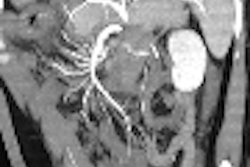
A few inches over, in the pancreas, high contrast flow rates can help answer the crucial question of resectability, according to researchers from Vienna.
In what may be the most important story of the season, CT lung cancer screening took a big step forward with the recent publication of Henschke and colleagues' I-ELCAP results, which found a mortality benefit from early lung cancer screening and resection of stage I tumors.
Last but not least, stroll through ancient Egypt and America with the true tale of P. T. Barnum's mummy by staff writer Heather Hokenson, all in your CT Digital Community.