Look for GE to reprise last year's introduction of its VCAR (volume computer-assisted reading) software by highlighting the software again at this year's meeting.
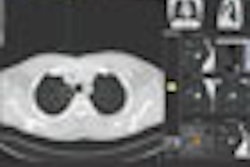
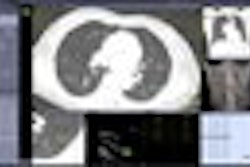
VCAR is designed to detect pulmonary nodules on multislice CT examinations. The software combines automatic nodule detection with volumetric assessment at initial and follow-up studies, according to the Chalfont St. Giles, U.K., company.
The software also has the potential to calculate the proportion of tissular component in the case of mixed nodules, assess the range of densities in other nonsolid nodules, and evaluate their evolution over time, the company said. GE believes the combination of density distribution and volumetric analysis could be particularly important for the management of nonsolid nodules, especially the follow-up of lesions with ground-glass opacity and a great axis smaller than 10 mm.
VCAR has clearance from the U.S. Food and Drug Administration, and GE is shipping the product.
By Brian Casey
AuntMinnie.com staff writer
November 3, 2006
Copyright © 2006 AuntMinnie.com