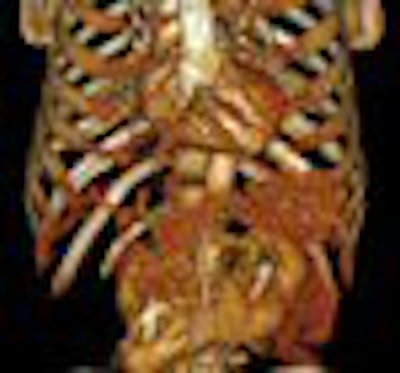
Philips of Andover, MA, will demonstrate recent advances on its Brilliance 64-slice CT platform, including a new release of workstation software that includes tools for cardiac vessel analysis.
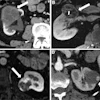
Extended Brilliance Workspace release 3.5 is the latest version of Philips' workstation software, and includes advanced cardiac imaging tools such as quantitative vessel analysis. New for the software are applications such as a "magic glass viewer," electrophysiological planning for radiofrequency ablation, and Tumor LOC, a feature that allows tumor localization on the CT console. Extended Brilliance Workspace 3.5 will be available in June of 2007, according to Philips.

Also look for Philips to tout the latest release of its Brilliance Workspace Portal feature, which enables clinicians to log on to a Web site that emulates the company's Brilliance Workspace interface. Version 2.0 of the offering enables 10 concurrent users to log on and view up to 30,000 slices, while a two-server configuration supports the viewing of up to 60,000 slices. It also includes advanced cardiac analysis capabilities for visualization of stenoses and stents, and also includes CT reporting features. The 2.0 version will be available in June of 2007.
In specialty imaging, Philips will promote its Brilliance Big Bore system, which features an 85-cm bore, 24 mm of anatomical coverage, and an optional table capable of supporting patients weighing up to 650 lb. Designed for applications such as bariatric, trauma, and interventional imaging, the system has a 60-cm true scan field-of-view and a 70-cm extended-display FOV. Philips began shipping Brilliance Big Bore in 2006 in the U.S. and internationally.
As a work-in-progress, Philips will discuss its work in sequential dual-energy CT scanning.
By Brian Casey
AuntMinnie.com staff writers
October 26, 2006
Copyright © 2006 AuntMinnie.com