Dear AuntMinnie Member,
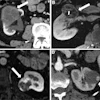
SAN FRANCISCO - Contrast-induced nephropathy has become a major issue for CT practitioners as the number and complexity of CT procedures using contrast media grow. How to prevent renal injury was the subject of a series of sessions on Wednesday at Stanford University's International Symposium on Multidetector-Row CT.
A key aspect of reducing CIN incidence is proper patient assessment, according an article by staff writer Wayne Forrest that we're featuring in our CT Digital Community. Clinicians should develop procedures for assessing high-risk patients to see if they have any risk factors for renal injury following contrast administration.
The speakers also discussed strategies for preventing CIN, which can be as simple as ensuring that patients are properly hydrated before their imaging study. More controversial was whether iso-osmolar contrast agents result in fewer CIN incidents than low-osmolar media. Get the rest of the story by clicking here.
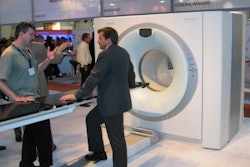
In another article from the MDCT meeting, presenters discussed dual-source CT, a recently introduced technology that uses two x-ray sources and two detector arrays to double the amount of data collected with each rotation of the CT gantry. Staff writer Eric Barnes reports on the technical advances behind the system, and some of the clinical results of the earliest adopters of dual-source CT, in an article you can reach by clicking here.
For more coverage of the MDCT conference, check back with our newly redesigned CT Digital Community, at ct.auntminnie.com.