GE Healthcare of Chalfont St. Giles, U.K., has made the first installation of its BrightSpeed value-priced CT scanner family.
The BrightSpeed line was introduced at the 2005 RSNA show and was designed to be an economical alternative for facilities making the move from single-slice CT to multislice imaging. BrightSpeed scanners come in four-, eight-, and 16-slice configurations, and include some of the same technology found on the company's flagship LightSpeed VCT 64-slice CT system.
The new system was a 16-slice BrightSpeed Elite model, and was installed at Moreland Medical Center in Waukesha, WI.
By AuntMinnie.com staff writers
May 5, 2006
Related Reading
GE installs PET/CT in Boston, April 28, 2006
GE gets FDA nod on Senographe Essential, April 20, 2006
GE, Swedish Brain Foundation host Brain Day event, March 28, 2006
GE closes $161 million deal with Primedex/Radnet, March 21, 2006
GE initiates LightSpeed VCT cardiology trials, March 15, 2006
Copyright © 2006 AuntMinnie.com

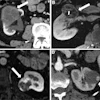
![Axial images from unenhanced calcium score cardiac CT (left) and curved planar reformation images from CT angiography (right) show that higher long-term exposure to air pollution is associated with greater coronary artery calcium and more obstructive coronary artery disease (CAD). Top row: Images in a 68-year-old male patient with higher 10-year mean ambient air pollution exposure (7.9 μg/m3 for particulate matter measuring ≤2.5 μm in diameter [PM2.5] and 17.4 parts per billion [ppb] for NO2) with extensive CAD (coronary artery calcium score [CACS] >1,000 and obstructive CAD [≥70% diameter stenosis]). Bottom row: Images in a 57-year-old female patient with lower 10-year mean ambient air pollution exposure (6.3 μg/m3 for PM2.5 and 4.6 ppb for NO2) with no CAD (CACS = 0 and no obstructive stenosis).](https://img.auntminnie.com/mindful/smg/workspaces/default/uploads/2026/06/hanneman.r6SMLzkezo.png?auto=format%2Ccompress&fit=crop&h=100&q=70&w=100)


![Axial images from unenhanced calcium score cardiac CT (left) and curved planar reformation images from CT angiography (right) show that higher long-term exposure to air pollution is associated with greater coronary artery calcium and more obstructive coronary artery disease (CAD). Top row: Images in a 68-year-old male patient with higher 10-year mean ambient air pollution exposure (7.9 μg/m3 for particulate matter measuring ≤2.5 μm in diameter [PM2.5] and 17.4 parts per billion [ppb] for NO2) with extensive CAD (coronary artery calcium score [CACS] >1,000 and obstructive CAD [≥70% diameter stenosis]). Bottom row: Images in a 57-year-old female patient with lower 10-year mean ambient air pollution exposure (6.3 μg/m3 for PM2.5 and 4.6 ppb for NO2) with no CAD (CACS = 0 and no obstructive stenosis).](https://img.auntminnie.com/mindful/smg/workspaces/default/uploads/2026/06/hanneman.r6SMLzkezo.png?auto=format%2Ccompress&fit=crop&h=112&q=70&w=112)