Dear AuntMinnie Member,
Our winter run of AuntMinnieTV: Advances in CT Technology closes this week with a final video report on new CT product introductions from the 2005 RSNA conference.
Over the past several weeks we've profiled all of the major CT vendors, including Philips, GE, Siemens, and Toshiba, as well as one start-up firm, NeuroLogica. We've used the power of full-motion streaming video to put you virtually on the floor of McCormick Place -- but without the aching feet.
To review the entire series, just visit our AuntMinnieTV RSNA 2005 Video Gallery, by clicking here. And if you're a big fan of AuntMinnieTV, we've got several more video reports coming up on other topics, so check back with the section in coming weeks.
If it's more CT news you're looking for, check out a report we're featuring in our CT Digital Community from the International Symposium on Endovascular Therapy (ISET), under way this week in Miami Beach, FL.
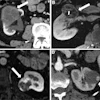
In the article, Dr. Bart Dolmatch from the University of Texas Southwestern Medical Center in Dallas explains why he disagrees with a recent clinical study that found digital subtraction angiography to be superior to CTA or MRA for renal artery stenosis. Read all about it by clicking here, or visit the CT Digital Community at ct.auntminnie.com.