Image analysis software developer Medicsight has received the European CE Mark for Release I of its CT recognition application. The Release I iterations include image analysis applications for CT images of the heart, lung, and colon: MedicHeart I, MedicColon I, and MedicLung I, respectively. The Delaware-based company said the Release II iterations of the software would contain computer-aided detection (CAD) capabilities.
In other news, the firm has successfully completed a $10 million stock placement to long-term investors, including European institutions and strategic partners, to assist the company in developing its international distribution expansion. These new funds will be used to continue the delivery of the company’s London-based Medicsight PLC’s business plan.
The developer also said it is holding discussions to acquire the outstanding 16% of ordinary shares in the London operation in order to secure cost savings and enable it to focus on building international brand recognition for a single investment vehicle.
By AuntMinnie.com staff writersOctober 8, 2003
Related Reading
Lifesyne CT screening center opens in London, May 14, 2003
Medicsight continues U.K. plans, eyes U.S. imaging center market, April 16, 2003
Copyright © 2003 AuntMinnie.com
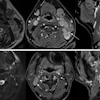



![Axial images from unenhanced calcium score cardiac CT (left) and curved planar reformation images from CT angiography (right) show that higher long-term exposure to air pollution is associated with greater coronary artery calcium and more obstructive coronary artery disease (CAD). Top row: Images in a 68-year-old male patient with higher 10-year mean ambient air pollution exposure (7.9 μg/m3 for particulate matter measuring ≤2.5 μm in diameter [PM2.5] and 17.4 parts per billion [ppb] for NO2) with extensive CAD (coronary artery calcium score [CACS] >1,000 and obstructive CAD [≥70% diameter stenosis]). Bottom row: Images in a 57-year-old female patient with lower 10-year mean ambient air pollution exposure (6.3 μg/m3 for PM2.5 and 4.6 ppb for NO2) with no CAD (CACS = 0 and no obstructive stenosis).](https://img.auntminnie.com/mindful/smg/workspaces/default/uploads/2026/06/hanneman.r6SMLzkezo.png?auto=format%2Ccompress&fit=crop&h=100&q=70&w=100)


![Axial images from unenhanced calcium score cardiac CT (left) and curved planar reformation images from CT angiography (right) show that higher long-term exposure to air pollution is associated with greater coronary artery calcium and more obstructive coronary artery disease (CAD). Top row: Images in a 68-year-old male patient with higher 10-year mean ambient air pollution exposure (7.9 μg/m3 for particulate matter measuring ≤2.5 μm in diameter [PM2.5] and 17.4 parts per billion [ppb] for NO2) with extensive CAD (coronary artery calcium score [CACS] >1,000 and obstructive CAD [≥70% diameter stenosis]). Bottom row: Images in a 57-year-old female patient with lower 10-year mean ambient air pollution exposure (6.3 μg/m3 for PM2.5 and 4.6 ppb for NO2) with no CAD (CACS = 0 and no obstructive stenosis).](https://img.auntminnie.com/mindful/smg/workspaces/default/uploads/2026/06/hanneman.r6SMLzkezo.png?auto=format%2Ccompress&fit=crop&h=112&q=70&w=112)