PITTSBURGH -- Radiologists face numerous challenges from increasing imaging volumes to funding shortages in research. But they can weather these challenges and advance their careers.
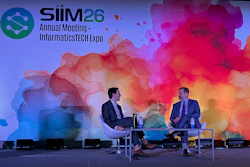
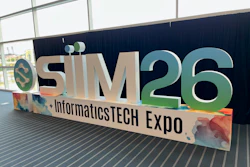
Brad Erickson, MD, PhD, director of the Mayo AI Lab, part of the Mayo Clinic, gave a talk to attendees at the Society for Imaging Informatics in Medicine (SIIM) annual meeting about building careers that blend clinical practice with research.
The talk, part of SIIM's "Ask the Informaticist" series, covered challenges and stresses that radiologists face in federal funding for research and declining reimbursement rates.
"We're a very resourceful and intelligent group, and we will figure it out," Erickson said. "But I think we're still working through how to get the best pathway."
Erickson also talked about his upcoming retirement from the Mayo AI Lab and his post-retirement plans.
Check out AuntMinnie’s full coverage of SIIM 2026 here.




![A normal mammogram confirmed by three-year radiologic follow-up illustrates reader-marked regions of interest (ROIs) during (A) unaided (round 1) and (B) artificial intelligence (AI)–assisted (round 2) reading. Each colored dot represents an ROI for recall by a human reader. Readers could mark more than one ROI per case, represented by multiple dots of the same color. During AI-assisted reading, the AI system displayed three visible prompts: two with suspicion of malignancy scores of 35% (left mediolateral oblique [L MLO] and craniocaudal [L CC]) and one with a suspicion of malignancy score of 10% (right craniocaudal [R CC]), shown as polygonal overlays. Without AI, six of 10 readers (60%) marked a false-positive ROI. With AI assistance, this fell to two of 10 (20%). R MLO = right mediolateral oblique.](https://img.auntminnie.com/mindful/smg/workspaces/default/uploads/2026/07/2026-07-14-radiology-mammogram-ai-auto-bias.H0bYO8QlWs.jpg?auto=format%2Ccompress&fit=crop&h=112&q=70&w=112)


