Aidoc is expanding its clinical AI scope to help health systems deploy imaging AI models built in-house with Nvidia MONAI into routine clinical use at scale.
The company announced at RSNA 2025 that it has entered into partnerships with Nvidia MONAI and with Quibim, an AI solutions and medical image analysis software developer, to achieve this.
AI models developed by healthcare entities for their own internal use may be “stranded” by the inability to deploy them effectively in clinical workflows and scaling them across sites and modalities, explains Aidoc. Through the Aidoc–MONAI partnership, “homegrown” MONAI-based models can be connected directly into aiOS through one dedicated Aidoc API.
MONAI’s open-source framework for medical imaging AI creates a standardized path from development to clinical workflows without each organization rebuilding infrastructure, monitoring, security, or integrations from scratch, the firms said.
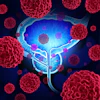
Aidoc and Quibim are partnering to introduce QP-Prostate, a prostate MRI AI solution. QP-Prostate automatically evaluates PI-RADS v21 compliance, assesses prostate MRI image quality based on PI-QUAL v2 guidelines, segments the prostate gland, and identifies and highlights regions that are suspicious for clinically significant prostate cancer. It also provides a PI-RADS-compliant structured report that integrates AI findings with radiologist annotations.