The fiscal year (FY) 2025 Hospital Inpatient Prospective Payment System (IPPS) final rule includes a new technology add-on payment (NTAP) of $241.39 for Annalise.ai's Enterprise CTB Triage - OH, the American College of Radiology (ACR) noted in a final rule summary.
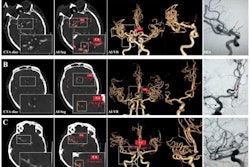
Annalise Enterprise CTB Triage - OH is software that uses an AI algorithm to aid in the triage and prioritization of studies with features suggestive of obstructive hydrocephalus (OH) in noncontrast CT (NCCT) brain scans. The class II medical device makes study-level output available to an order and imaging management system for worklist prioritization or triage, according to company information supplied for the NTAP program.
Hospitals acquire the Annalise Enterprise CTB Triage - OH system on a subscription-based model, with an annual cost of $180,000 per hospital, the FY IPPS final rule explained. In its NTAP application, Annalise estimated the percent of NCCT cases where the software would likely be ordered at 50% of NCCT head scans for older patients (>65 years of age) and 30% of NCCT head scans for younger patients.
Annalise Enterprise CTB Triage - OH received 510(k) clearance from the U.S. Food and Drug Administration (FDA) in August 2023 as a breakthrough device. To qualify for a new technology add-on payment, the technology must represent an advance that substantially improves, relative to technologies previously available, the diagnosis or treatment of Medicare beneficiaries. The FY 2025 IPPS final rule will be published August 28.