
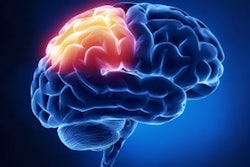
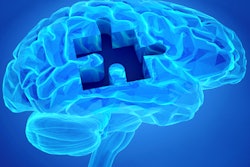
ADM Diagnostics was recently awarded a two-year, $1.96 million grant to develop a diagnostic test to detect the effects of repeated head impact upon the brain, and to differentiate these effects from Alzheimer's disease.
The award is a phase II Small Business Innovation Research grant from the U.S. National Institutes of Aging. Of the total funds, $1 million for the first year has been authorized. The remainder is contingent upon approval of an interim report and availability of funds.
ADM said it is using brain imaging, artificial intelligence, and blood biomarkers to develop
analysis tools that can be used by clinicians to assess and differentiate brain effects in early, potentially reversible stages. This also includes when and if chronic traumatic encephalopathy may be progressing.






![A normal mammogram confirmed by three-year radiologic follow-up illustrates reader-marked regions of interest (ROIs) during (A) unaided (round 1) and (B) artificial intelligence (AI)–assisted (round 2) reading. Each colored dot represents an ROI for recall by a human reader. Readers could mark more than one ROI per case, represented by multiple dots of the same color. During AI-assisted reading, the AI system displayed three visible prompts: two with suspicion of malignancy scores of 35% (left mediolateral oblique [L MLO] and craniocaudal [L CC]) and one with a suspicion of malignancy score of 10% (right craniocaudal [R CC]), shown as polygonal overlays. Without AI, six of 10 readers (60%) marked a false-positive ROI. With AI assistance, this fell to two of 10 (20%). R MLO = right mediolateral oblique.](https://img.auntminnie.com/mindful/smg/workspaces/default/uploads/2026/07/2026-07-14-radiology-mammogram-ai-auto-bias.H0bYO8QlWs.jpg?auto=format%2Ccompress&fit=crop&h=112&q=70&w=112)


