
Presagen has developed a new algorithm that cleans poor-quality data automatically to improve artificial intelligence (AI) scalability.
Data used to develop and train AI algorithms can sometimes be of poor quality due to clinical subjectivity, uncertainty, and even adversarial attacks, according to Presagen, and sometimes event experts cannot detect data errors.
Poor-quality data can affect the training stability and performance of AI algorithms, and Presagen's UDC technology works by automatically detecting poor-quality data, according to the company.
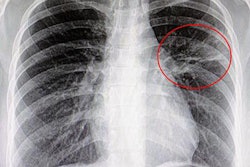
UDC can be applied for imaging issues, specifically detecting pneumonia on chest x-rays. UDC reliably detected poor-quality data on its own, improving AI accuracy in some cases by more than 20%, Presagen said. The algorithm also cleans data that is used to validate AI accuracy.








![A normal mammogram confirmed by three-year radiologic follow-up illustrates reader-marked regions of interest (ROIs) during (A) unaided (round 1) and (B) artificial intelligence (AI)–assisted (round 2) reading. Each colored dot represents an ROI for recall by a human reader. Readers could mark more than one ROI per case, represented by multiple dots of the same color. During AI-assisted reading, the AI system displayed three visible prompts: two with suspicion of malignancy scores of 35% (left mediolateral oblique [L MLO] and craniocaudal [L CC]) and one with a suspicion of malignancy score of 10% (right craniocaudal [R CC]), shown as polygonal overlays. Without AI, six of 10 readers (60%) marked a false-positive ROI. With AI assistance, this fell to two of 10 (20%). R MLO = right mediolateral oblique.](https://img.auntminnie.com/mindful/smg/workspaces/default/uploads/2026/07/2026-07-14-radiology-mammogram-ai-auto-bias.H0bYO8QlWs.jpg?auto=format%2Ccompress&fit=crop&h=112&q=70&w=112)


