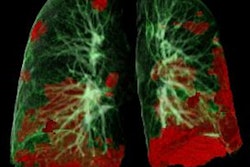
Artificial intelligence (AI) algorithms that analyze CT radiomics and clinical and demographic factors can predict with promising accuracy whether a patient with COVID-19 will likely need a ventilator, according to researchers at Case Western Reserve University in Cleveland.
Using chest CT exams taken in late 2019 from about 100 of the first cases from the outbreak in Wuhan, China, Anant Madabhushi, PhD, head of the university's Center for Computational Imaging and Personalized Diagnostics (CCIPD) and colleagues developed two machine-learning models: one based on neural networks and one derived from radiomics. The models currently have an accuracy of between 68% and 75% for predicting which patients would likely require a ventilator, according to the university.
In a statement from Case Western Reserve, Madabhushi said he believes that incorporating clinical and comorbidity factors will further improve the models. In addition, the models could turn out to be more helpful if a second wave of the novel coronavirus hits in the fall, he said.