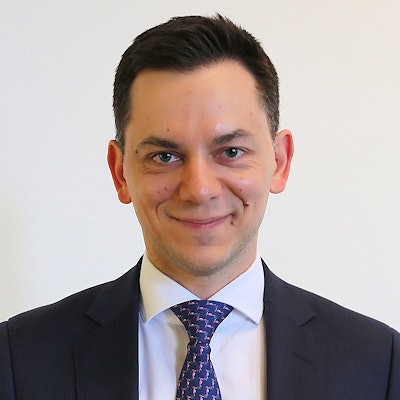
VIENNA - There's a lot of talk and fuss at the moment about artificial intelligence (AI), but how can it really boost efficiency and improve workflow, and how can you realize the full potential of the emerging technology? Dr. Sergey Morozov, PhD, professor, CEO of the Research and Practice Center of Medical Radiology, and chief radiology officer of Moscow, provides some answers in part two of our special focus on AI.
Dr. Sergey Morozov, PhD, from Moscow.
Video produced by Christof. G. Pelz I GRAFIFANT Creation. Grafik. Photo I www.grafifant.at

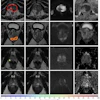





![A normal mammogram confirmed by three-year radiologic follow-up illustrates reader-marked regions of interest (ROIs) during (A) unaided (round 1) and (B) artificial intelligence (AI)–assisted (round 2) reading. Each colored dot represents an ROI for recall by a human reader. Readers could mark more than one ROI per case, represented by multiple dots of the same color. During AI-assisted reading, the AI system displayed three visible prompts: two with suspicion of malignancy scores of 35% (left mediolateral oblique [L MLO] and craniocaudal [L CC]) and one with a suspicion of malignancy score of 10% (right craniocaudal [R CC]), shown as polygonal overlays. Without AI, six of 10 readers (60%) marked a false-positive ROI. With AI assistance, this fell to two of 10 (20%). R MLO = right mediolateral oblique.](https://img.auntminnie.com/mindful/smg/workspaces/default/uploads/2026/07/2026-07-14-radiology-mammogram-ai-auto-bias.H0bYO8QlWs.jpg?auto=format%2Ccompress&fit=crop&h=112&q=70&w=112)


