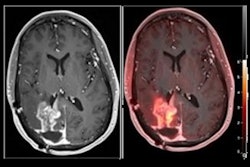
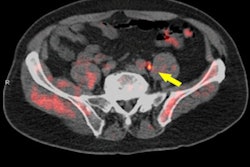
F-18 fluciclovine PET successfully detected recurrent prostate cancer in 56% of patients with negative PSMA PET scans, demonstrating its value as a complementary imaging tool for cases where standard PSMA imaging fails to identify disease.
- Detection Rate: F-18 fluciclovine PET found disease in 28 of 50 patients (56%) with negative PSMA-PET results
- Disease Distribution: Half of positive cases showed prostate bed confinement, while the other half demonstrated nodal or distant metastases
- PSA-Dependent Detection: Detection rates increased from 44% at PSA 0.2-0.5 ng/mL to 100% at PSA 5 ng/mL or higher
- Management Impact: Fluciclovine PET changed intended treatment in 71% of patients overall, including 87% with positive findings
- Complementary Role: Study supports using fluciclovine as a follow-up imaging option for carefully selected PSMA-negative patients with biochemical recurrence
F-18 fluciclovine PET detects recurrent prostate cancer in over half of patients with negative prostate-specific membrane antigen (PSMA) PET findings, according to a study published October 29 in the Journal of Nuclear Medicine.
The finding is from a prospective trial involving 50 patients with biochemical recurrence (BCR) who underwent F-18 fluciclovine PET/CT within 30 days of negative PSMA-PET scans, noted Laszlo Szidonya, MD, of Oregon Health & Science University in Portland, OR, and colleagues.
“These findings support a complementary role for F-18 fluciclovine PET in carefully selected patients with negative PSMA imaging results," the group wrote.
F-18 fluciclovine (Axumin, Blue Earth Diagnostics), a synthetic amino acid, was the first U.S. Food and Drug Administration (FDA)-approved PET radiotracer for prostate cancer imaging, the group wrote. It has since largely been replaced in the management of biochemical recurrence by PSMA-targeting agents such as Gallium-68 (Ga-68) PSMA-11 and F-18-piflufolastat, owing to their higher sensitivity for nodal and distant metastatic disease, they added. However PSMA-PET has limitations, such as that up to 10% of cases may involve PSMA-negative tumors, they noted.
To explore a potential complementary role for F-18 fluciclovine, the researchers recruited 50 patients with BCR (defined as a PSA of 0.2 ng/mL or higher) and negative PSMA-PET findings. Participants underwent PET/CT within 30 days of the negative PSMA scan, with researchers assessing detection rates, disease distribution, PSA-stratified outcomes, management impact, and correct localization rate.
According to the findings, F-18 fluciclovine PET returned positive findings in 28 of 50 patients (56%). Disease was confined to the prostate bed in 14 patients (50%), whereas 14 (50%) demonstrated nodal or distant metastases. Detection rate climbed with higher PSA levels, from 44% at a PSA of 0.2 to 0.5 ng/mL to 100% at 5 ng/mL or higher. In secondary results, the intended management changed in 71% of patients after the F-18 fluciclovine PET: 87% of patients with positive findings and 54% with negative findings.
"F-19 fluciclovine PET detected recurrent disease in over half of patients with negative PSMA-PET findings and frequently altered management," the group wrote.
Although management changes after a positive PSMA-PET result are relatively straightforward, treatment deescalation following a negative result remains controversial, the researchers wrote. Among their cohort of patients with BCR and a negative PSMA-PET, disease was confined to the prostatectomy bed in only half of cases with positive F-18 fluciclovine findings, while the remainder demonstrated metastatic involvement. A positive F-18 fluciclovine result can thus further inform management by enabling targeted treatment of identified disease sites, they added.
"However, optimal management of patients with BCR and negative PSMA and F-18 fluciclovine PET findings remains uncertain, underscoring the need for additional prospective data," the researchers concluded.
The full study is available here.