Konica Minolta Healthcare Americas highlighted a study showing that its dynamic digital radiography (DDR) technology can help predict patient outcomes three years after total shoulder arthroplasty (TSA).
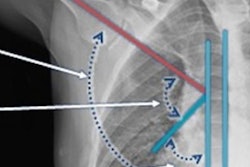
A team from Emory Healthcare and Baylor College of Medicine examined scapulohumeral rhythm (SHR), the coordinated motion of the shoulder blade and upper arm during movement, measured via DDR, with findings suggesting the metric can directly assess shoulder kinematics and forecast postoperative results.
"DDR enables us to visualize actual shoulder kinematics during movement and provides a validated, reliable assessment of in vivo SHR within a busy clinical environment," noted senior author Eric Wagner, MD, of Emory Healthcare, in a company news release.
Measuring SHR has historically required laboratory-based 3D modeling techniques that are resource-intensive and impractical in routine care. DDR can be performed in outpatient settings using the same equipment as conventional static x-rays, allowing the measurement to move into the clinic, the company added.
For the analysis, 85 patients who had undergone anatomic TSA (aTSA, n = 27) or reverse TSA (rTSA, n = 58) were enrolled and imaged with DDR using a previously validated measurement protocol, the company said.
Patients with higher SHR, indicating lower scapular compensation, showed higher patient-reported outcome scores at three years, according to the results, while lower SHR was linked to worse outcomes including increased pain and reduced subjective shoulder function.
"In our clinic, every shoulder patient now receives a DDR evaluation before and after intervention, as we have found the information it provides for pre-surgical planning and post-operative monitoring is invaluable for helping to improve patient outcomes,” added lead author Sameer Khawaja, MD, of Baylor.
Ultimately, incorporating DDR into standard shoulder care may facilitate targeted rehabilitation, postoperative surveillance, and continue to improve outcomes by reproducing native mechanics after TSA, the researchers stated.
The full study was published in the Journal of Shoulder and Elbow Surgery and is available here.