Uterine fibroid embolization (UFE) is vastly underutilized when it comes to treating uterine fibroids, according to a large nationwide study presented on March 6 at the Society of Interventional Radiology (SIR) 2017 annual meeting in Washington, DC.
Hysterectomies are performed 65 times more often than uterine fibroid embolization, despite data showing that embolization results in substantially lower costs and shorter hospital stays than hysterectomies.
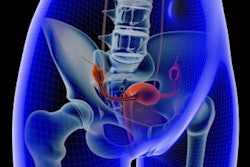
UFE is a minimally invasive image-guided treatment performed by interventional radiologists. A thin catheter is inserted into the artery at the groin or wrist, and a catheter is guided to the fibroid's blood supply. Small particles are then released to float downstream and block the small blood vessels and deprive the fibroid of nutrients. This results in the fibroid softening, bleeding less, and shrinking in size. Approximately nine in 10 patients who receive UFE report that their symptoms are eliminated, according to SIR.
In the study presented this week, researchers from the University of Miami analyzed the 2012 and 2013 Nationwide Inpatient Sample, the largest all-payor inpatient healthcare database in the U.S. A team led by Dr. Prasoon Mohan used billing codes that identified hysterectomy and embolization completed for uterine fibroid treatment, and compared procedure volume between the two.
The researchers found that 165,000 more hysterectomies were performed nationwide than embolizations (167,650 versus 2,470). Also, only 0.4% of embolizations were performed in rural hospitals, compared with 9.4% of hysterectomies in the same setting. For embolizations, 7.9% of procedures were performed in small hospital systems, compared with 67.4% in large hospitals systems.
The disparity occurs despite the fact that UFE results in shorter hospital stays (2.16 days for embolization versus 2.32 days for hysterectomy), and it was less expensive than hysterectomy by about $12,000 ($21,583 for embolization versus $33,104 for hysterectomy).
The results highlight a healthcare access and education disparity in who receives embolization treatment, according to the researchers.
"The fact that so few women undergo UFE in rural and small hospital settings shows a healthcare access and education disparity in who receives this treatment," Mohan said in a statement. "It is important that we continue to educate patients about choice and determine ways to increase access to this effective, less invasive therapy."