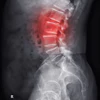
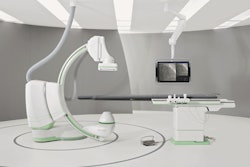
Fujifilm Medical Systems USA has received 510(k) clearance from the U.S Food and Drug Administration (FDA) for its gadolinium and cesium digital radiography (DR) detectors for pediatric use.
The sizes include 24 x 30 cm, 14 x 17 cm, and 17 x 17 cm. The smallest format 24 x 30-cm cesium iodide detector is specifically designed to offer high performance for low-dose x-ray exams, such as for small patients and anatomy such as extremities, shoulders, C-spines, and more, Fuji said.







![Representative example of a 16-year-old male patient with underlying X-linked adrenoleukodystrophy. (A, B) Paired anteroposterior (AP) chest radiograph and dual-energy x-ray absorptiometry (DXA) report shows lumbar spine (L1 through L4) areal bone mineral density (BMD). The DXA report was reformatted for anonymization and improved readability. The patient had low BMD (Z score ≤ −2.0). (C) Model (chest radiography [CXR]–BMD) output shows the predicted raw BMD and Z score in comparison with the DXA reference standard, together with interpretability analyses using Shapley additive explanations (SHAP) and gradient-weighted class activation maps. The patient was classified as having low BMD, consistent with the reference standard. AM = age-matched, DEXA = dual-energy x-ray absorptiometry, RM2 = room 2, SNUH = Seoul National University Hospital, YA = young adult.](https://img.auntminnie.com/mindful/smg/workspaces/default/uploads/2026/04/ai-children-bone-density.0snnf2EJjr.jpg?auto=format%2Ccompress&fit=crop&h=112&q=70&w=112)


