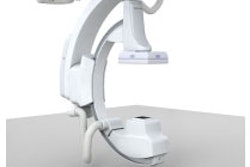
This Ridgefield Park, NJ, company will use the RSNA show to launch a new computed radiography system that incorporates several new technologies in storage phosphor-based image acquisition.
First introduced at the French national radiology conference in October, DX-S employs Agfa's DirectriX needle-based detector technology, while Scanhead is another new technique that uses new line-to-line CR simulation and light collection technology.
Using the technologies together gives DX-S increased image quality and throughput, with reduced waiting times for CR cassettes and faster access to digital images, according to Agfa. The system has a nominal throughput of 120 plates an hour, with a throughput of 180 plates per hour after patient demographic data release.
The system was designed specifically for decentralized and in-room use in general radiography, pediatric, and emergency room environments.
By Brian Casey
AuntMinnie.com staff writer
November 9, 2005
Copyright © 2005 AuntMinnie.com







![Representative example of a 16-year-old male patient with underlying X-linked adrenoleukodystrophy. (A, B) Paired anteroposterior (AP) chest radiograph and dual-energy x-ray absorptiometry (DXA) report shows lumbar spine (L1 through L4) areal bone mineral density (BMD). The DXA report was reformatted for anonymization and improved readability. The patient had low BMD (Z score ≤ −2.0). (C) Model (chest radiography [CXR]–BMD) output shows the predicted raw BMD and Z score in comparison with the DXA reference standard, together with interpretability analyses using Shapley additive explanations (SHAP) and gradient-weighted class activation maps. The patient was classified as having low BMD, consistent with the reference standard. AM = age-matched, DEXA = dual-energy x-ray absorptiometry, RM2 = room 2, SNUH = Seoul National University Hospital, YA = young adult.](https://img.auntminnie.com/mindful/smg/workspaces/default/uploads/2026/04/ai-children-bone-density.0snnf2EJjr.jpg?auto=format%2Ccompress&fit=crop&h=112&q=70&w=112)


