Digital imaging developer DALSA of Waterloo, Ontario has signed an agreement with Rad-icon Imaging of Santa Clara, CA, to develop digital radiography components using Rad-icon's large-area complementary metal-oxide semiconductor (CMOS) technology.
The companies believe that Rad-icon's technology will enable the firms to produce digital x-ray detectors that are lower in cost than those already on the market.
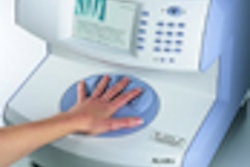
Rad-icon has already produced a 50 x 50-mm detector, which is suitable for spot mammography and some bone densitometry applications. The firms believe they can produce detectors as large as 18 x 24 cm, which would enable the panels to be used in a wide range of medical imaging applications.
By AuntMinnie.com staff writersDecember 14, 2000
Related Reading
DALSA to enter digital mammography market, May 11, 2000
Copyright © 2000 AuntMinnie.com







![Representative example of a 16-year-old male patient with underlying X-linked adrenoleukodystrophy. (A, B) Paired anteroposterior (AP) chest radiograph and dual-energy x-ray absorptiometry (DXA) report shows lumbar spine (L1 through L4) areal bone mineral density (BMD). The DXA report was reformatted for anonymization and improved readability. The patient had low BMD (Z score ≤ −2.0). (C) Model (chest radiography [CXR]–BMD) output shows the predicted raw BMD and Z score in comparison with the DXA reference standard, together with interpretability analyses using Shapley additive explanations (SHAP) and gradient-weighted class activation maps. The patient was classified as having low BMD, consistent with the reference standard. AM = age-matched, DEXA = dual-energy x-ray absorptiometry, RM2 = room 2, SNUH = Seoul National University Hospital, YA = young adult.](https://img.auntminnie.com/mindful/smg/workspaces/default/uploads/2026/04/ai-children-bone-density.0snnf2EJjr.jpg?auto=format%2Ccompress&fit=crop&h=112&q=70&w=112)


